Indianz.Com > News > Cronkite News: Navajo Nation copes with widespread impacts of COVID-19
 YouTube
 ‘It’s creating a new normal’: A Navajo school district and its students fight to overcome amid COVID-19
Monday, November 23, 2020
Cronkite News
PIÑON, Arizona – One student runs 85 feet up a hill every morning, just to get a cellphone signal so he can call in his attendance. Another moved to Phoenix by himself, after his only parent died of COVID-19, to work construction while going to school online.
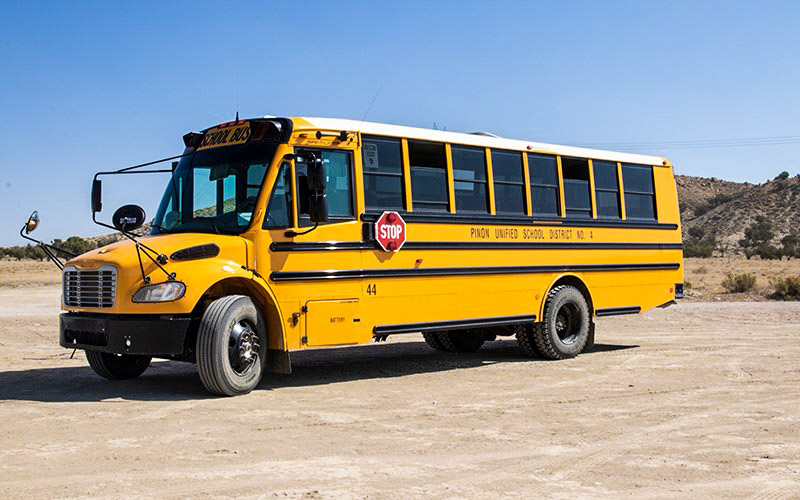
Then there’s the high school senior who spends six hours most days doing homework in a car next to a school bus turned Wi-Fi hotspot – the only way some kids on the Navajo Nation can get assignments to their teachers.
These kids share a dream: to graduate high school, find a way to go to college, get a degree, land a dream job – get out of their small town, succeed and soar.
Even in the best of times, that dream is harder for Native American students to attain. And now COVID-19 has brought one of the greatest challenges yet to these young people.
For them, it’s about so much more than being separated from friends or having to figure out how to use Zoom. All that isolation and upheaval has been accompanied by death and great loss.
Across the Navajo reservation, victims of COVD-19 include parents and grandparents, sole guardians and providers, mentors and teachers. Without them, some students have lost their way or, quite literally, fallen off the map.
Said one district superintendent: “We have some kids that we just don’t know where they are.”
A school district fights to survive
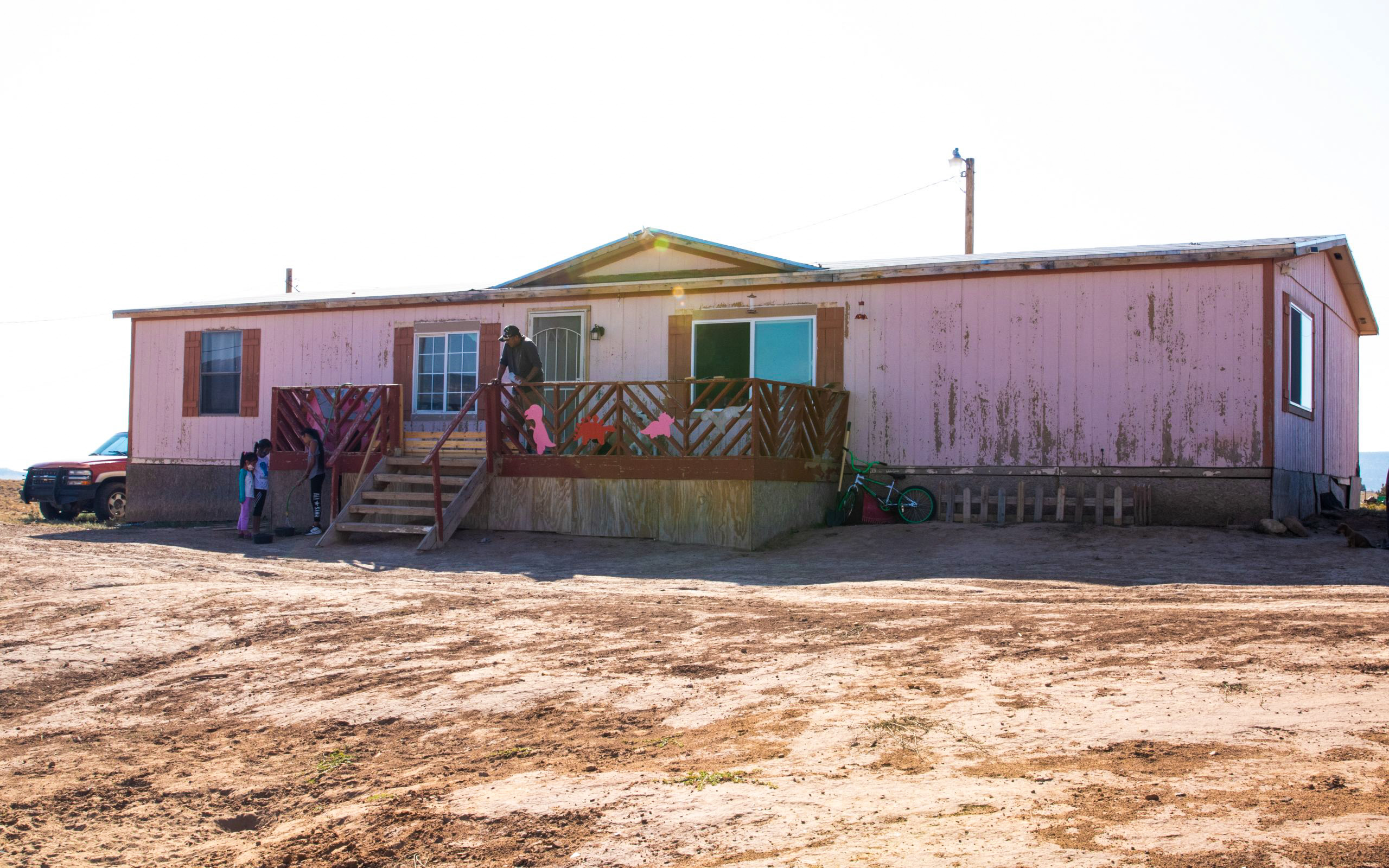
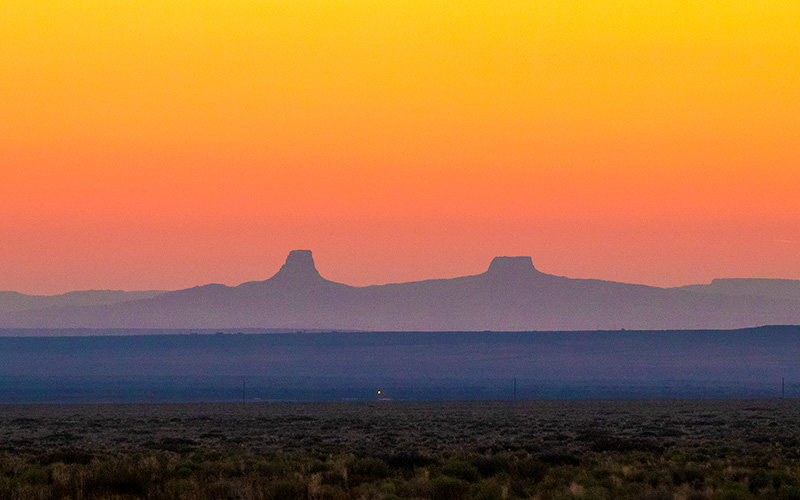
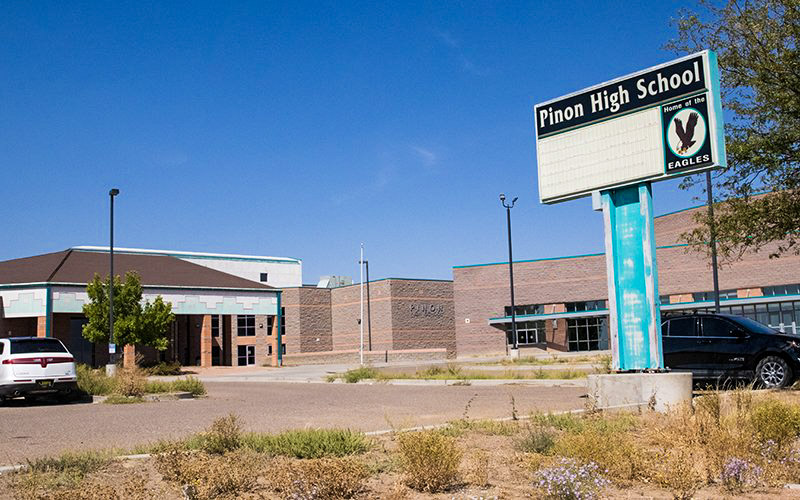
The drive from Flagstaff northeast to Piñon takes more than two hours over a two-lane highway and dirt road. Just a few hundred families live in this community, in modest houses scattered across hills roamed by horses and dotted with brush.
A single campus accommodates the elementary, middle and high schools.
Here, on a reservation the size of West Virginia, the COVID-19 death rate has been higher than that of any U.S. state. So even as some schools reopened for in-person learning this fall, those on the Navajo reservation did not.
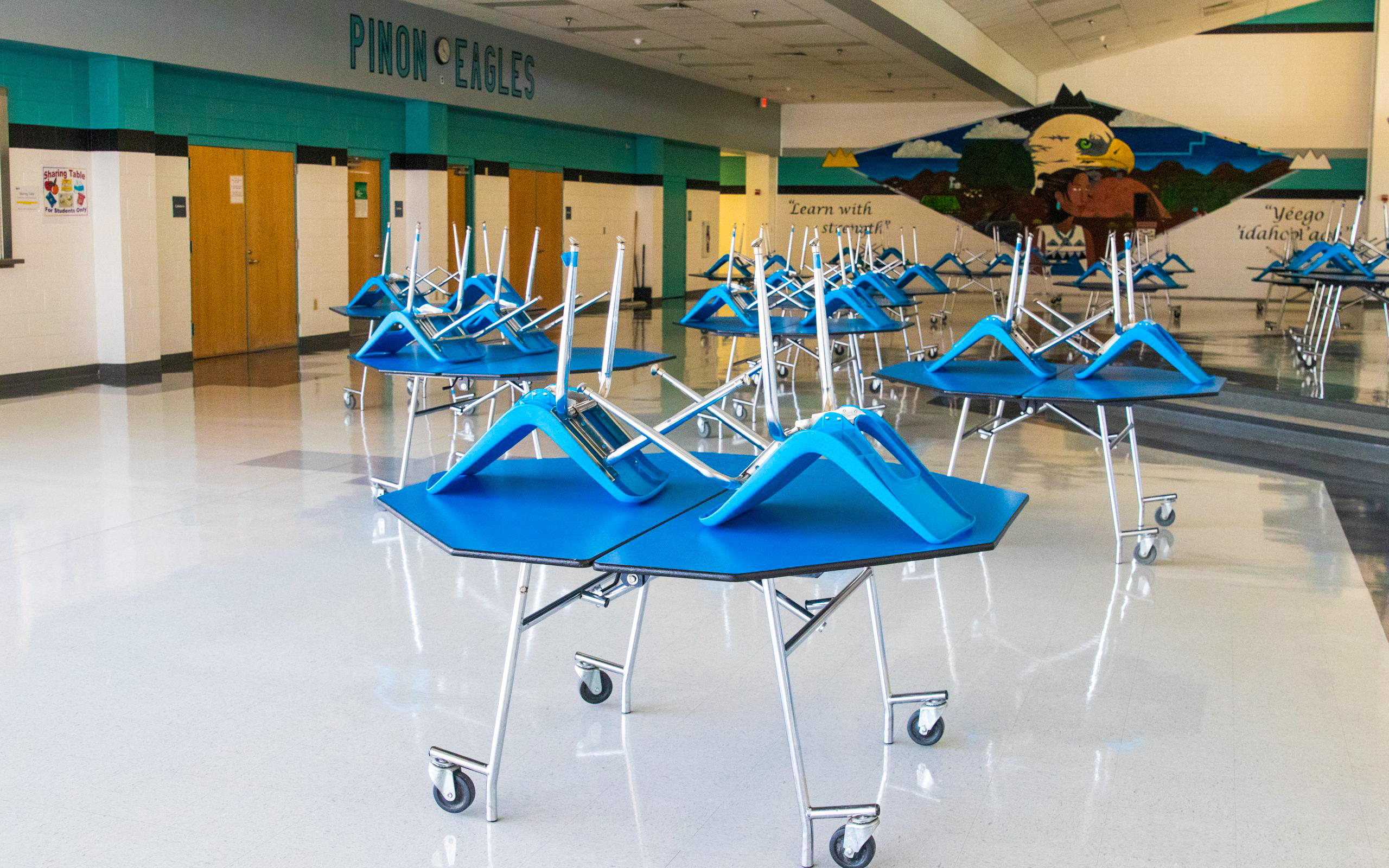
Without the 300 students who normally fill its cafeteria, crowd its lockers and seek help in its counseling offices, Piñon High’s cavernous hallways are unnaturally quiet. Do-not-disturb signs hang on classroom doors, indicating Zoom sessions in progress.
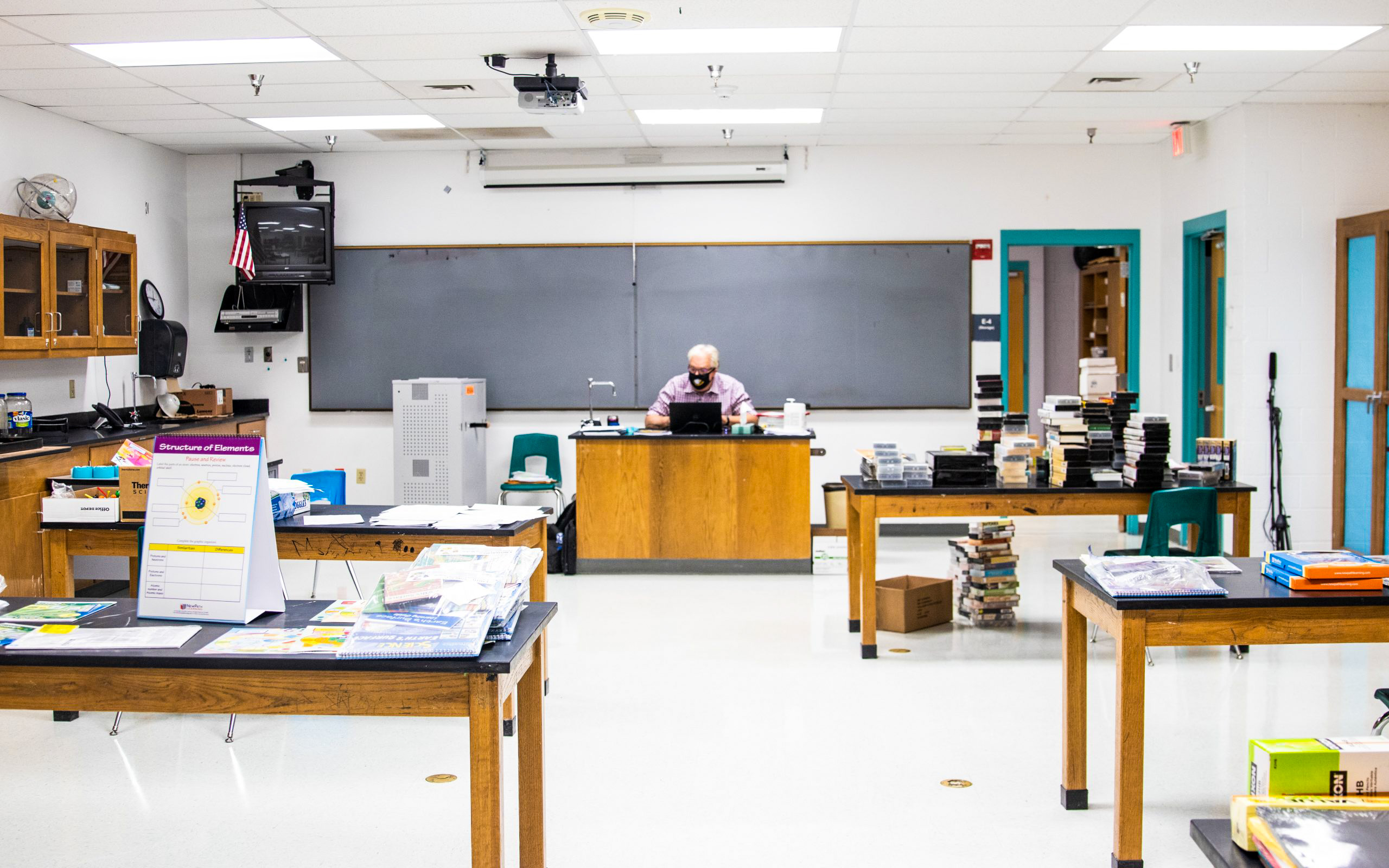
Inside one empty room, a carpentry teacher plays heavy metal music and bobs his head at his desk. In another, science teacher James Gustafson’s lab tables are covered with surplus VHS videos that he’s sorting through for hidden gems.
“‘Citizen Kane!’” he says. “That makes it all worth it.”
Missing friends – and laughs
About 20 miles from the district campus, one of those Wi-Fi buses sits in a dusty lot across the road from a gas station. Two cars, their engines idling, are parked beside it.
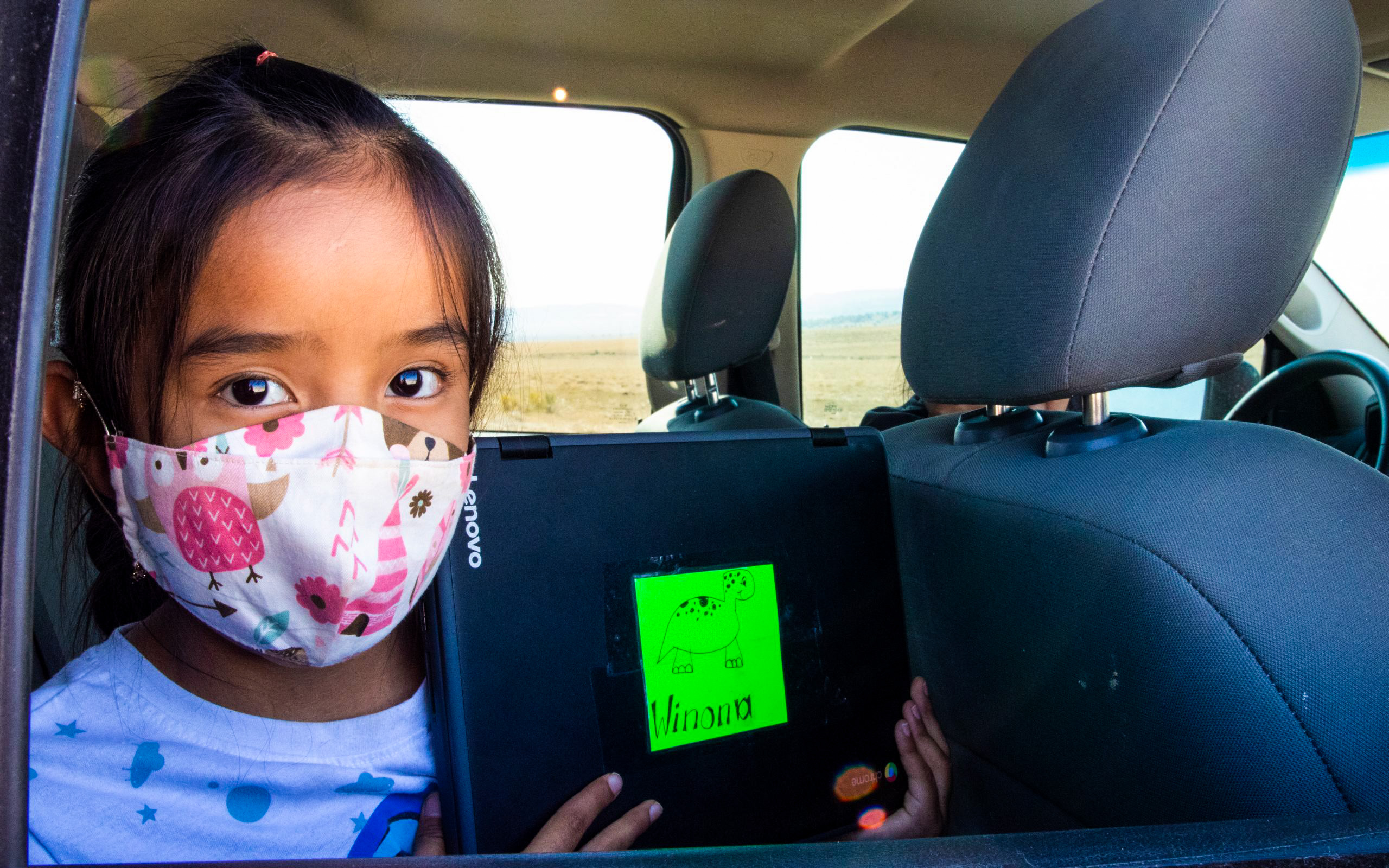
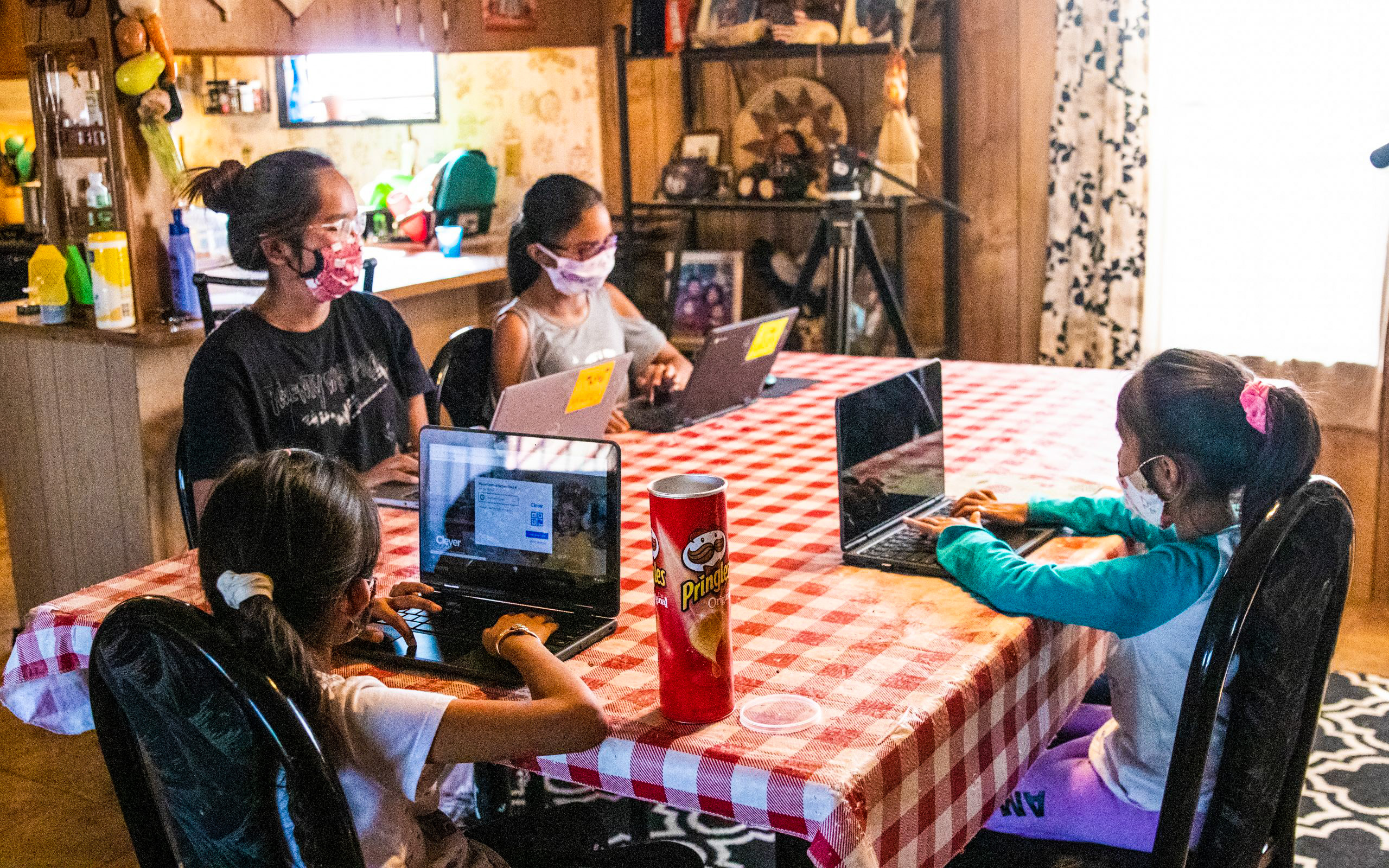
Inside, four sisters, ages 6 to 17, balance Chromebook computers on their laps and upload the day’s assignments as their parents patiently do what they can to help.
Math teacher Beverly Mix and construction worker Dekoven Begay have been out of work since COVID-19 began ravaging the Navajo Nation last spring. But it doesn’t mean the couple aren’t working.
“Making sure my kids get online is a job,” Mix said, “and making sure that they understand what they’re being taught – because sometimes the teacher only has like 20 minutes of class.”
The bus is usually in this spot every Monday, Wednesday and Friday, but at Mix’s request the driver came on a Thursday after a morning spent delivering meals to students’ homes.
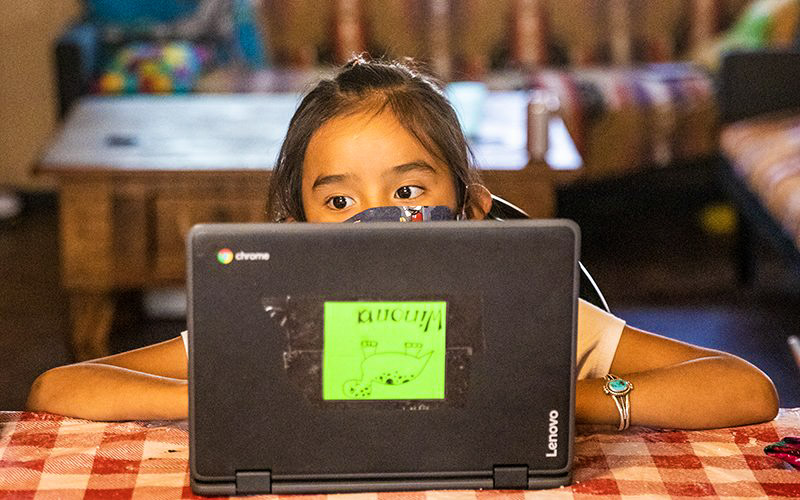
Their girls – Chenoa, Sonora, Winona and Annabah – each have specially designed car-desks that Mix ordered from Hobby Lobby. Their laptops, provided by the school district, are emblazoned with a nametag and drawing of their choosing.

Real and surreal
Unlike their students, Piñon High School’s teachers report to work each day, careful to wear masks and social distance. Alone in his classroom, 11th-grade English teacher Robert LaBarge delivers lectures into a computer.
“The kids always tease me for laughing at my own jokes,” he said, smiling. “But there’s no one in class! Who’s supposed to laugh at my jokes?”
In his room, chairs are stacked in a corner and books sit, unused, on shelves. LaBarge recently started sending dictionaries to students without Wi-Fi to help them with their vocabulary work.
“It’s this very strange thing,” he said, “going by these buildings and these playgrounds and these basketball courts, and there’s no one out there. It just feels weird.”
Like many of his colleagues, LaBarge makes himself available to his students however he can. He gets phone calls, texts, emails, Facebook messages, Instagram DMs. Sometimes, he said, they want to talk about schoolwork; other times, they express their feelings about living in a pandemic.
Still dreaming
In May, research published by the Annenberg Institute at Brown University
predicted
that springtime school shutdowns would result in children returning for the fall semester with 63% to 68% of the typical gains in reading and 37% to 50% in math.
Unsurprisingly, the researchers noted that setbacks would likely be greater for children of color and those who live in poverty – especially those without reliable internet.
In Piñon, teachers and administrators didn’t need a research paper to tell them that.
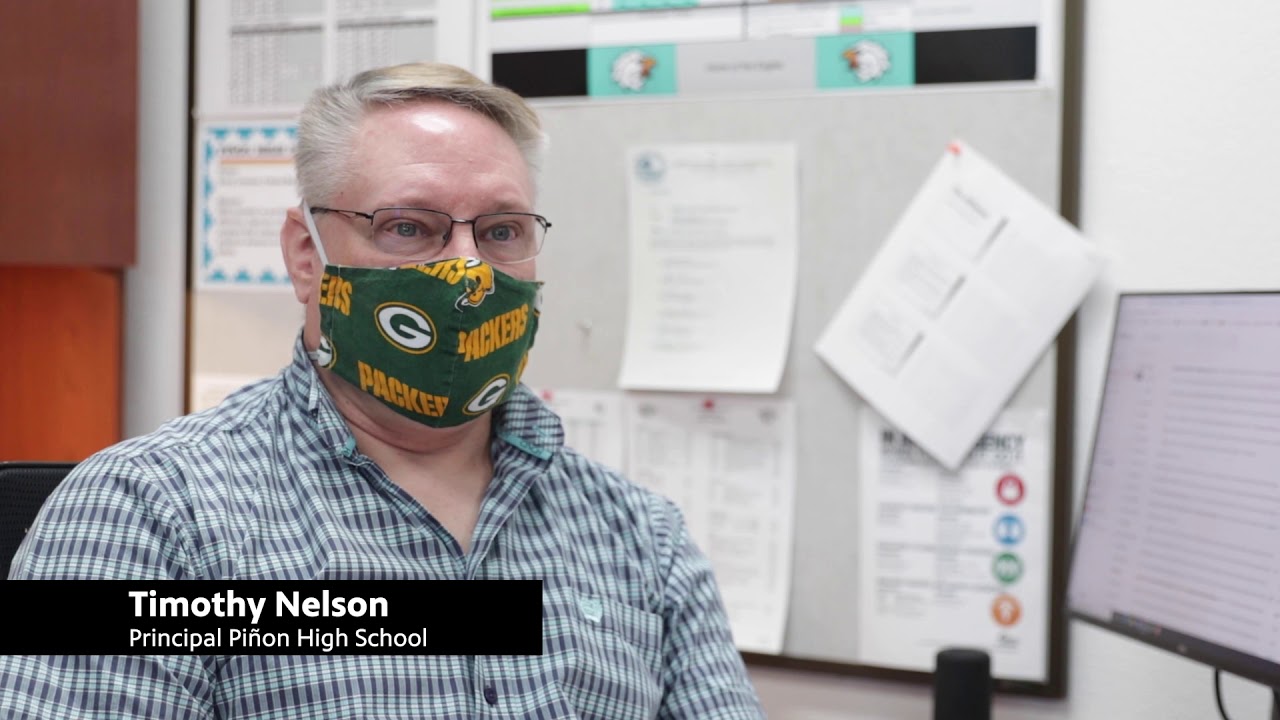
Principal Nelson mentioned one student in particular, who lost his only surviving parent to the virus and moved to Phoenix to work 10-hour days in construction while keeping up with online coursework. Feeling overwhelmed, he eventually returned to Piñon to live with extended family.
He isn’t the only one in that type of situation, said Ostgaard, the superintendent.
“We have a few (students) that for different reasons, I guess you would almost consider homeless at this point,” he said. “They’re kind of bouncing from relative to relative, and they’re in different places.”
Gustafson, the science teacher, worries most about those students who can’t get connected – noting that many, while still technically enrolled, have not been turning in schoolwork.
The divide between the kids with and without internet is “de facto segregation,” he said.
“The students that don’t have the net, and consequently don’t have immediate feedback … on material or whatever else, they aren’t necessarily getting everything that students with the net are getting.”
Note: This story originally appeared on Cronkite News. It is published via a Creative Commons license. Cronkite News is produced by the Walter Cronkite School of Journalism and Mass Communication at Arizona State University.
Search
Filed Under
Tags
More Headlines
NAFOA: 5 Things You Need to Know This Week (July 13, 2026)
Chuck Hoskin: Cherokee Nation builds largest and best tribal healthcare system
Native America Calling: Tribal solar projects shine on without much federal support
Native America Calling: Native student discipline disparities persist at New Mexico school district
Indian boarding school healing efforts face challenges at national level
Native America Calling: Native programs aimed at cultivating responsible tourism
Native America Calling: Trump Administration escalates attack on Native American museum narratives
Cronkite News: United States falters in World Cup following intervention by President Trump
Native America Calling: Finding success through the art of contemporary horsemanship
NAFOA: 5 Things You Need to Know This Week (July 6, 2026)
Chuck Hoskin: Recommitting to an America that keeps promises to tribal nations
Native America Calling: Two Native artists making waves in the arts world
Native America Calling: Native Hall of Fame recognizes leaders and advocates whose work benefits tribes and community
Native America Calling: Native historians elevate overlooked history in the wake of America250 celebrations
Native America Calling: Native food and America’s origins, a tribal vineyard and an ‘Indigenous’ cafe
More Headlines
Chuck Hoskin: Cherokee Nation builds largest and best tribal healthcare system
Native America Calling: Tribal solar projects shine on without much federal support
Native America Calling: Native student discipline disparities persist at New Mexico school district
Indian boarding school healing efforts face challenges at national level
Native America Calling: Native programs aimed at cultivating responsible tourism
Native America Calling: Trump Administration escalates attack on Native American museum narratives
Cronkite News: United States falters in World Cup following intervention by President Trump
Native America Calling: Finding success through the art of contemporary horsemanship
NAFOA: 5 Things You Need to Know This Week (July 6, 2026)
Chuck Hoskin: Recommitting to an America that keeps promises to tribal nations
Native America Calling: Two Native artists making waves in the arts world
Native America Calling: Native Hall of Fame recognizes leaders and advocates whose work benefits tribes and community
Native America Calling: Native historians elevate overlooked history in the wake of America250 celebrations
Native America Calling: Native food and America’s origins, a tribal vineyard and an ‘Indigenous’ cafe
More Headlines