Indianz.Com > News > ‘Shut down DAPL’: Lakota youth bring black snake to Biden’s front door
‘Shut down DAPL’: Lakota youth bring black snake to Biden’s front door
Friday, April 2, 2021
Indianz.Com
WASHINGTON, D.C. —
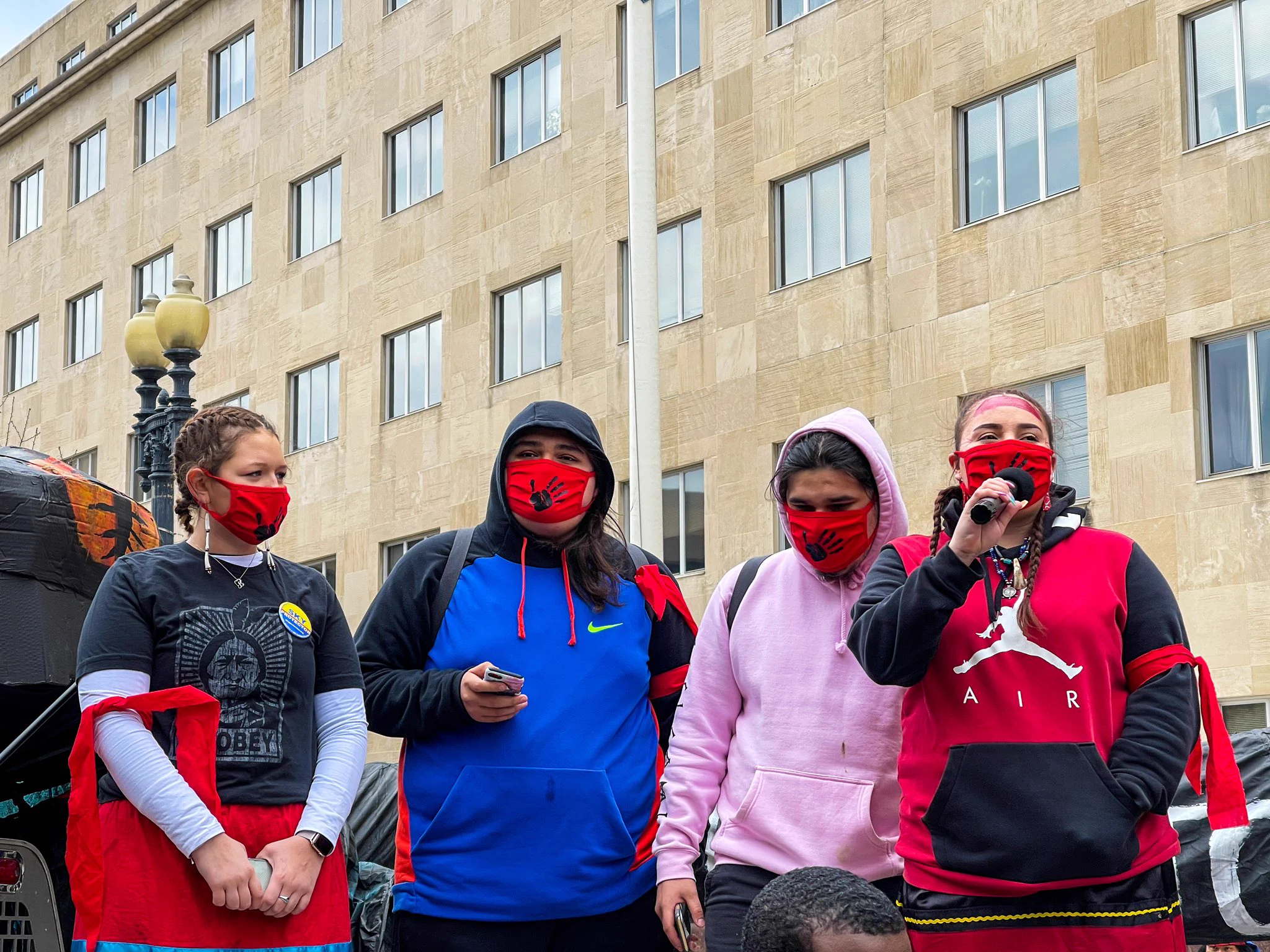
Five years since the fight against the Dakota Access Pipeline became a worldwide movement, and four years after tribes and their allies took to the streets in protest, Lakota youth returned to the nation’s capital to once again hold the federal government to its trust and treaty responsibilities.
Youth from the Standing Rock Sioux Tribe, the Cheyenne River Sioux Tribe and the Lower Brule Sioux Tribe traveled over 1,500 miles from their communities to make a simple yet pointed request. Shut down the Dakota Access Pipeline, which the federal courts have repeatedly determined was approved under a process that violated the law.
“The president is paying lip service to the Lakota youth,” Jasilyn Charger, a young Cheyenne River citizen, said of Joe Biden, the current occupant of the White House.
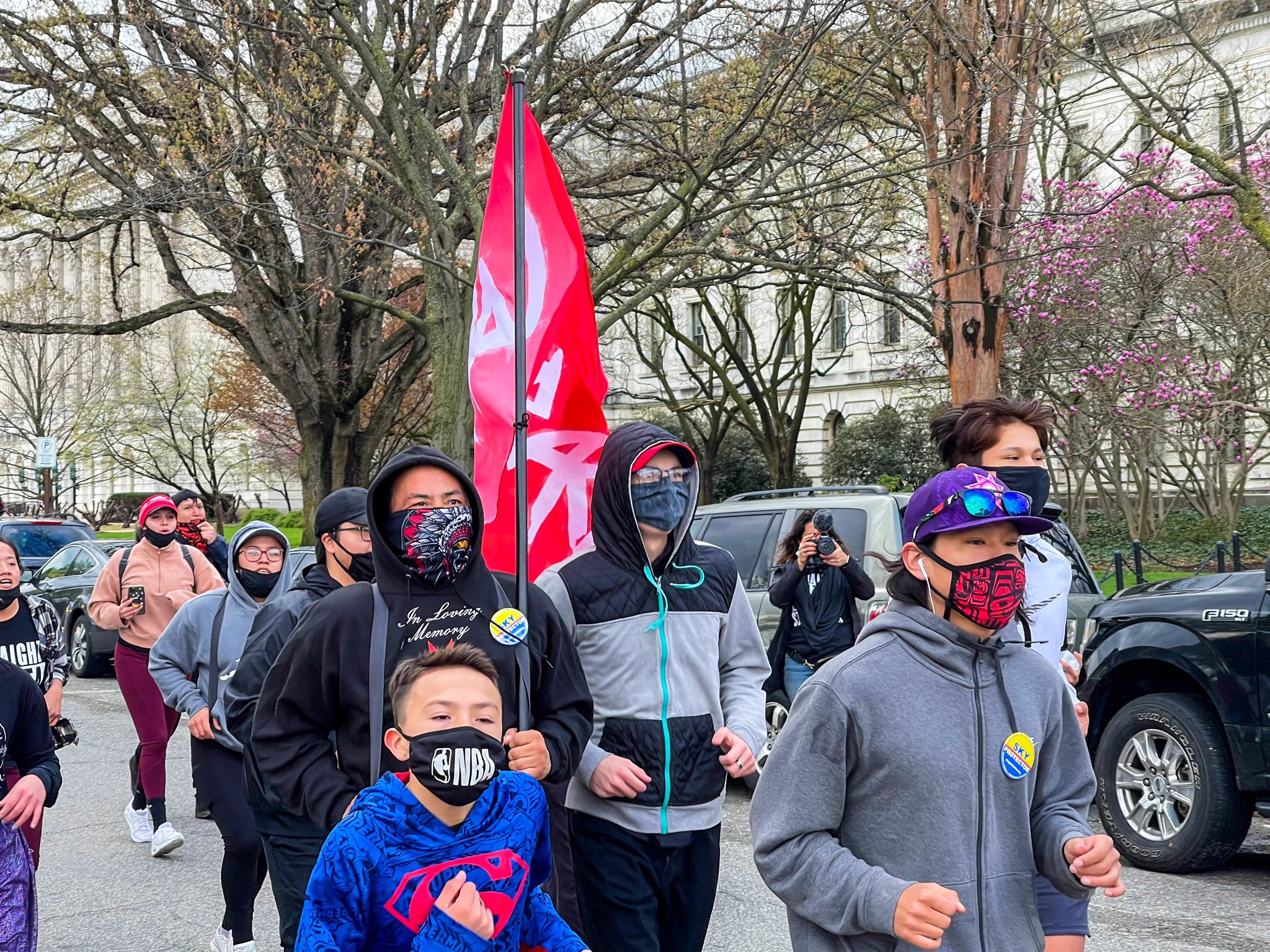
Starting with a run from the National Museum of the American Indian on Thursday morning, the youth called on President Biden to honor the 1868 Treaty of Fort Laramie and obtain the consent of their people when it comes to Dakota Access. The courts have already ruled that the federal government failed to consider how tribes of the Sioux Nation are impacted by the crude oil pipeline.
“We are here to tell the Biden administration we do not want the Dakota Access Pipeline flowing under our rivers,” said Danny Grassrope, a Lower Brule citizen from the Cheyenne River Grassroots Collective of young Lakota organizers and activists.
The U.S. Army Corps of Engineers approved the final portion of the pipeline in February 2017, during the administration of former Republican president Donald Trump. The decision was made without consulting tribes that had already sued the federal agency during the last year of Democratic former president Barack Obama’s second term in office.
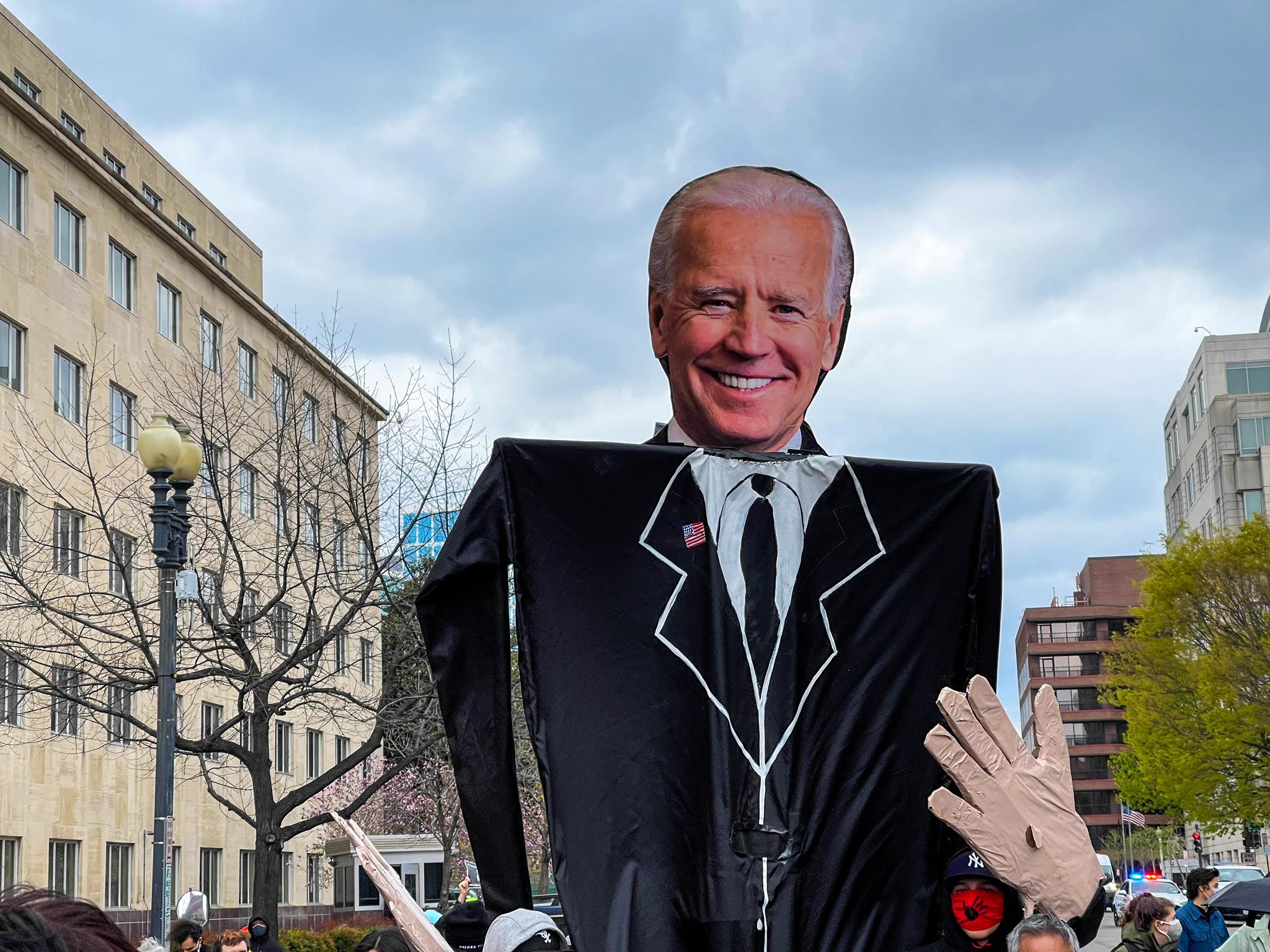
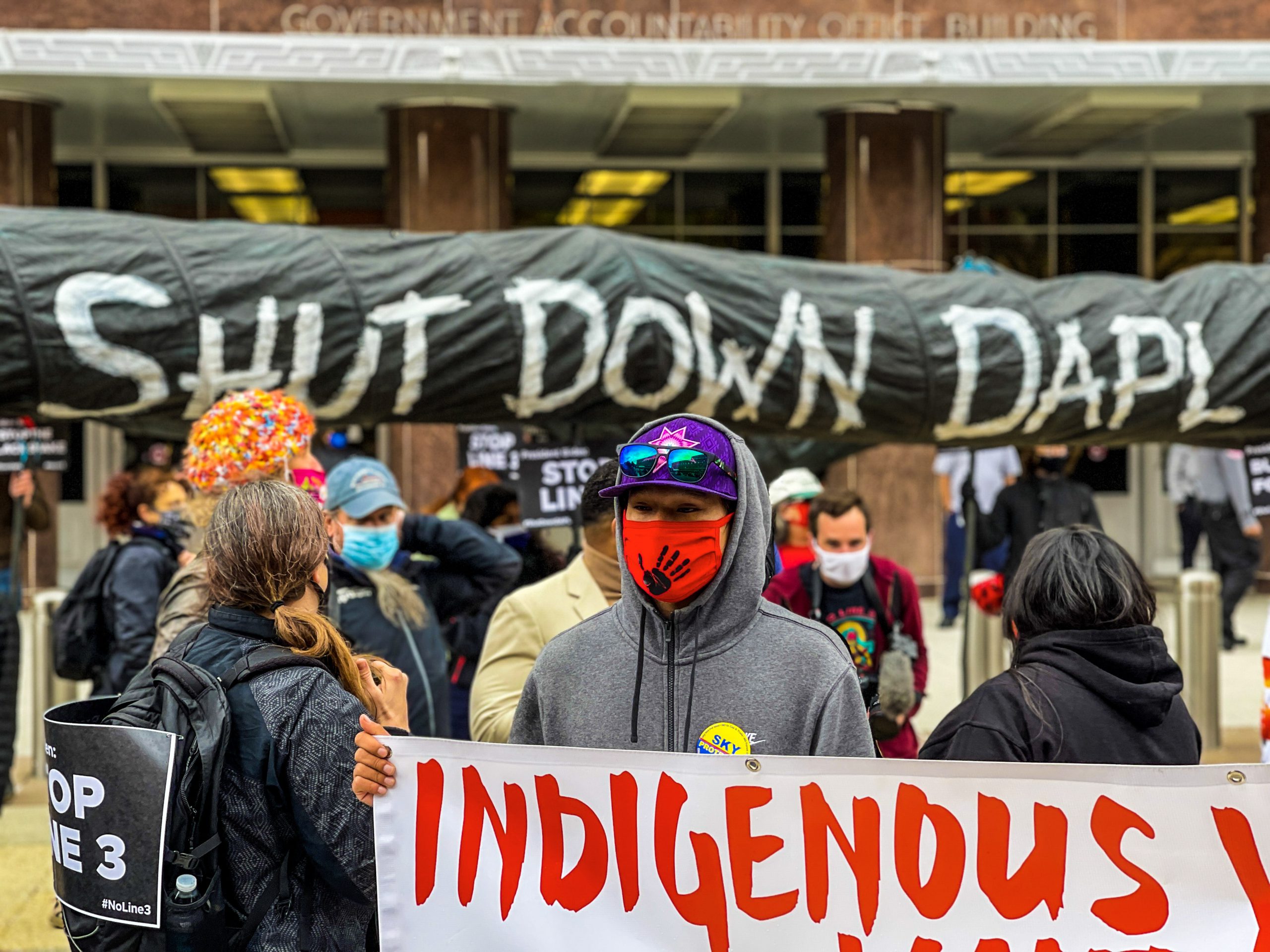
Despite the court victories, the arrival of another U.S. president hasn’t resulted in the closure of the pipeline, whose final portion lies on territory promised to the Sioux Nation under the 1868 treaty. Youth expressed continued frustration with the state of affairs, prompting their return to Washington, D.C., where they marched from the headquarters of the Army Corps to the White House, carrying a physical manifestation of their opponent through the streets of the city.
“The black snake symbolizes the Dakota Access Pipeline and we just now slayed it,”
Maya Runnels, the president of the Standing Rock Youth Council, said at Black Lives Matter Plaza, which is about the closest the public can get to the White House due to increased security around the facility.
“And now we’re giving it back to the White House, because we don’t want it on our land,” said Runnels after Lakota youth counted coup by striking down the 200-foot-long black snake at President Biden’s front door.
About three dozen youth from Standing Rock, Cheyenne River and Lower Brule — some as young as 16 years old — left their homes in North Dakota and South Dakota last Saturday in preparation for their events in D.C. They were accompanied by parents, chaperones and family members.
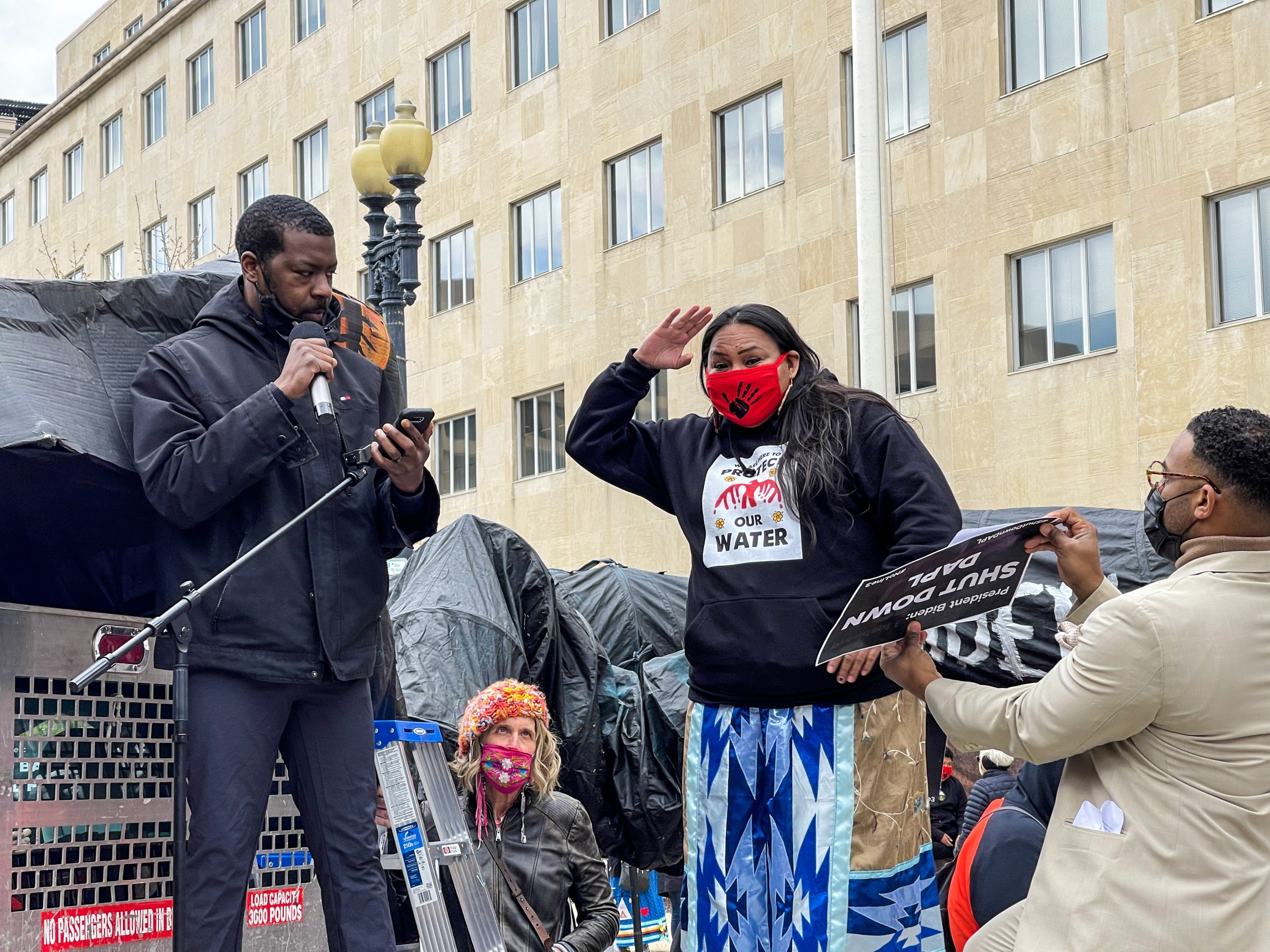
Along the way, the Lakota youth were hosted by the Meskwaki Nation in Iowa, where the Dakota Access Pipeline also runs through. Sarah Young Bear-Brown, a mother and activist from that tribal community, took part in the protest in D.C., speaking in front of the Army Corps headquarters in American Sign Language.
“The pipelines always break. We need to stop these pipelines,” Young Bear-Brown signed. She later led the crowd in a vocalized chant of “Kill the black snake” against Dakota Access.
Another group of Native activists also joined the events to call attention to the Stop Line 3 movement. The proposed oil pipeline would run through Ojibwe territory in northern Minnesota, where Silas Neeland, a 12-year-old citizen of the White Earth Nation, said it would cause major damage to wild rice, one of his people’s most important foods.
“We are not here to ask Biden, but we are here to demand Biden because he needs to learn to respect our treaties and our water,” Neeland said at the Army Corps building.
“The tribes’ unique role and their government-to-government relationship with the United States demand that their criticisms be treated with appropriate solicitude,” Judge David S. Tatel wrote in the decision.
However, the appeals court refused to order the shutdown of the pipeline, which has been in operation since June 2017, after the Trump administration rushed it through the federal review process. The White House has not responded to media inquiries about Biden’s stance on Dakota Access. In contrast, he rescinded approval for the Keystone XL Pipeline on his first day in office on January 20. Tribes also fought heavily against the project. The events in D.C. took place on the fifth anniversary of the establishment of the Sacred Stone Camp, which was the first to arise in opposition to the Dakota Access Pipeline on April 1, 2016. The movement quickly expanded, attracting multiple camps and drawing upwards of 10,000 people during peak times of resistance, particularly in the summer of 2016 and then again in December of that year. In August 2016, shortly after the Standing Rock Sioux Tribe and the Cheyenne River Sioux Tribe began litigating the pipeline, Lakota youth completed a 2,000-mile relay run to the nation’s capital. The ReZpect Our Water event culminated with a rally in front of the White House. A number of the participants in the run were present on Thursday. A month after the Trump administration approved the final portion at Standing Rock, about 5,000 Native people and allies marched to the White House as part of Native Nations Rise on March 10, 2017. Thursday’s event was much smaller, with the crowd mindful of the ongoing COVID-19 pandemic. All participants wore masks and other protective equipment, starting with the run on the National Mall, and ending with the rally at Black Lives Matter Plaza.Related Stories
‘She even protested the Dakota Access Pipeline’: Deb Haaland #DebForInterior (March 11, 2021)Cronkite News: Deb Haaland shares her vision for Interior Department (March 1, 2021)
Recap: #DebForInterior confirmation hearing (February 24, 2021)
Indigenously: Deb Haaland set for historic confirmation hearing (February 22, 2021)
Native women win major award for ‘Water Protectors’ book (January 27, 2021)
Standing Rock Sioux Tribe v. U.S. Army Corps of Engineers (January 26, 2021)
D.C. Circuit Court of Appeals: Standing Rock Sioux Tribe v. U.S. Army Corps of Engineers (January 26, 2021)
Native Sun News Today: Native activists hold Joe Biden to campaign promises (December 7, 2020)
Indian Country Today: The power of the Native vote (October 30, 2020)
Native Sun News Today: Tribes get more time to contest Dakota Access Pipeline (October 28, 2020)
Rodney Bordeaux: Joe Biden and Kamala Harris for Indian Country (October 22, 2020)
Search
Filed Under
Tags
More Headlines
President Trump makes his mark on tribal gaming agency with new appointment
Press Release: Billy Kirkland joins National Indian Gaming Commission
NAFOA: 5 Things You Need to Know This Week (June 1, 2026)
Chuck Hoskin: Cherokee Nation continues to share its legacy
Native America Calling: Alaska bears are the targets of a controversial management program
Native America Calling: A Native cafe, camas restoration and the Indigenous food pyramid
Source New Mexico: Uranium mine under consideration near sacred Mount Taylor
Native America Calling: Exploring home, culture, and personal resolve with writers Joan Kane and Sherman Funmaker
Montana Free Press: Lawsuit challenges cancellation of federal grants for tribal agricultural programs
Press Release: Institute of American Indian Arts announces scholarship created by Pueblo artist Rose B. Simpson
Press Release: Umatilla Tribes approve contract for Native legal aid program
Press Release: Department of Transportation opens $19 million tribal grant program
Native America Calling: Oil drilling vs cultural preservation at Chaco Canyon
NAFOA: 5 Things You Need to Know This Week (May 26, 2026)
Native America Calling: Border wall construction damaging sacred sites
More Headlines
Press Release: Billy Kirkland joins National Indian Gaming Commission
NAFOA: 5 Things You Need to Know This Week (June 1, 2026)
Chuck Hoskin: Cherokee Nation continues to share its legacy
Native America Calling: Alaska bears are the targets of a controversial management program
Native America Calling: A Native cafe, camas restoration and the Indigenous food pyramid
Source New Mexico: Uranium mine under consideration near sacred Mount Taylor
Native America Calling: Exploring home, culture, and personal resolve with writers Joan Kane and Sherman Funmaker
Montana Free Press: Lawsuit challenges cancellation of federal grants for tribal agricultural programs
Press Release: Institute of American Indian Arts announces scholarship created by Pueblo artist Rose B. Simpson
Press Release: Umatilla Tribes approve contract for Native legal aid program
Press Release: Department of Transportation opens $19 million tribal grant program
Native America Calling: Oil drilling vs cultural preservation at Chaco Canyon
NAFOA: 5 Things You Need to Know This Week (May 26, 2026)
Native America Calling: Border wall construction damaging sacred sites
More Headlines