Indianz.Com > News > Wabanaki Nations seek ‘equality’ for their tribal sovereignty

 youtu.be
 Wabanaki Nations seek ‘equality’ for their tribal sovereignty
‘We’re denied one of the most fundamental rights’
Monday, April 4, 2022
Indianz.Com
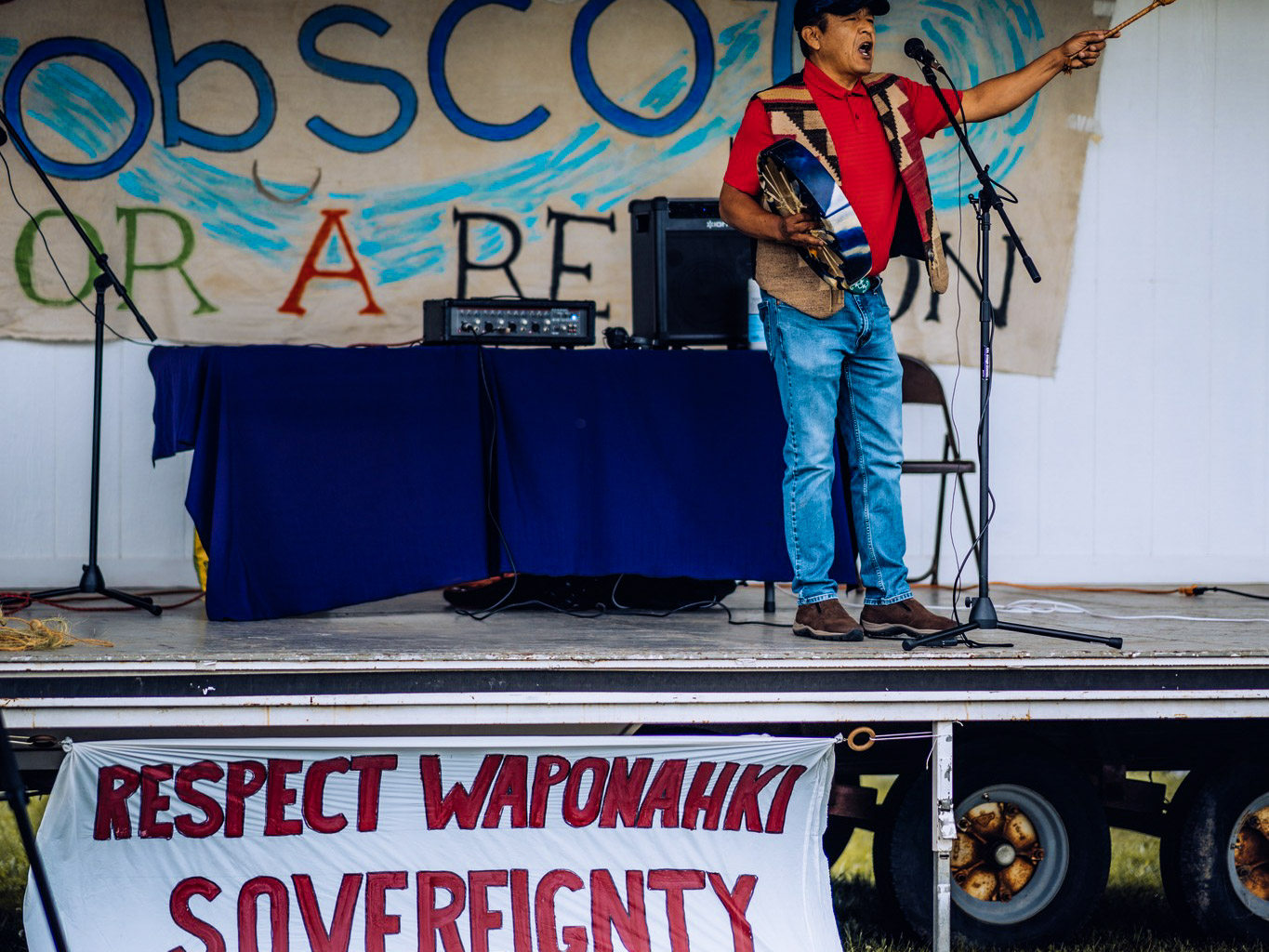
WASHINGTON, D.C. — With one long-overdue legislative achievement under their belts, tribal nations from one of the furthest ends of Indian Country are asking Congress to fully recognize their sovereignty.
Maine is home to five federally recognized tribal governments. But the Aroostook Band of Micmacs, Houlton Band of Maliseet Indians, the Passamaquoddy Tribe at Indian Township, the Passamaquoddy Tribe at Pleasant Point and the Penobscot Nation are unable to exercise their rights in the same manner as every other Indian nation.
The outcome has been disastrous. Whether it’s safeguarding water in their communities, enhancing public safety or protecting Indian children through the Indian Child Welfare Act (ICWA), tribal leaders say they are being left behind when it comes to true self-determination.
“Not having full authority under ICWA that other tribes have stifles our ability to exercise jurisdiction and has created a cascade of ramifications for our children and families,” Chief Clarissa Sabattis of the Houlton Band said at a hearing in the nation’s capital last week.
“We’re denied one of the most fundamental rights as Indian tribes and the impact of not having full authority over child custody proceedings under ICWA has resulted in the removal of up to 11 percent of our children in the past,” Sabattis added.
H.R.6707, the Advancing Equality for Wabanaki Nations Act, attempts to rectify the situation, at least going forward. The bill ensures that tribes in Maine will be covered by any future laws that benefit Indian Country, without having to ask Congress to be included. “For 30 years, we have been unable to negotiate a new jurisdictional agreement that gives us the legal authority to provide for health, welfare, and safety of our people,” said Chief Edward Peter-Paul of the Aroostook Band, also known as the Mi’kmaq Nation. “For 30 years, we have not been able to build our legal infrastructure, like a police department, a court system.” “H.R.6707, if enacted, marks the first time that our nation would be able to assume jurisdiction over our most precious resources — our children,” said Peter-Paul, whose tribe is based in the northernmost county of Maine. “It will allow us to start our nation building efforts by helping us to create our first court system, the court system to oversee our Indian Child Welfare Act cases.” The disparate treatment stems from the Maine Indian Claims Settlement Act of 1980. The federal statute, now more than four decades old, imposes a number of hurdles on the Houlton Band, the Passamaquoddy Tribe and the Penobscot Nation when it comes to their sovereign rights.Before the break, we heard from Chief William Nicholas Sr. of the Passamaquoddy Tribe, Chief Edward Peter-Paul of the Mi’kmaq Nation and Chief Clarissa Sabattis of the Houlton Band of Maliseet Indians. The tribal leaders asked for full recognition of their sovereignty by the U.S. pic.twitter.com/TczBlmaEnI
— indianz.com (@indianz) March 31, 2022


Rep. Jared Golden (D-Maine) introduced H.R.6707 on February 11. Objections from the forest industry are overblown because he said his bill only applies to future laws — not to prior statutes that affect environmental regulations. “This bill only affects the application in Maine of future laws that Congress may pass,” said Golden. “Laws like the Clean Air Act and Clean Water Act are already on the books and do not require reauthorization. So our bill does not implicate them.” Even if H.R.6707 becomes law, Golden pointed out that the disparate treatment of the Wabanaki Nations will continue. Of the 150-plus Indian Country laws that Congress has enacted since 1980, only one includes tribes in Maine, he said. “Out of the hundreds of beneficial tribal laws passed by Congress in the last 40 years, Congress has acted to apply only one of them specifically in Maine — and that was this year’s reauthorization of the Violence Against Women Act,” Golden told his colleagues.Note: H.R.6707 also ensures the Aroostook Band of Micmacs, also known as the Mi’kmaq Nation, can exercise its sovereignty in the same manner as other tribes. #HR4715 #HR5715 #HR6707
— indianz.com (@indianz) March 31, 2022

 www.facebook.com
 House Subcommittee for Indigenous Peoples of the United States
Committee Notice: Legislative Hearing on H.R.4715, H.R.5715, and H.R.6707 (March 31, 2022) Additional Documents (docs.house.gov)
Related Stories
House Subcommittee for Indigenous Peoples of the United States Legislative Hearing on H.R.4715, H.R.5715, and H.R.6707 (April 4, 2022)House Subcommittee for Indigenous Peoples of the United States Legislative Hearing on H.R.4715, H.R.5715, and H.R.6707 (March 31, 2022)
Tribes see progress with Violence Against Women Act and more funding (March 14, 2022)
Omnibus federal funding bill moving forward in Congress (March 9, 2022)
Progress cited in improving Violence Against Women Act for Indian Country (February 11, 2022)
Native America Calling: Fixing Passamaquoddy’s drinking water problem (January 5, 2022)
Bill recognizes tribal jurisdiction over non-Indian offenders (March 9, 2021)
Search
Filed Under
Tags
More Headlines
Native America Calling: How a young Ponca activist shaped the future of Native activism
Native America Calling: Tribes remain excluded from some major water policy decisions
Native America Calling: Assessing college campus safety in light of troubling allegations at Cornell University
Native America Calling: Native authors and book sellers reflect on a record year for banned books
Native America Calling: Native Playlist with Jeremy Dutcher and Mali Obomsawin
Native America Calling: What removing questions about race from the U.S. Census means for Native Americans
Chuck Hoskin: Cherokee Nation employees serve their communities
Native America Calling: One tribe breaks from the pack on prediction markets
Native America Calling: Finding success through the art of contemporary horsemanship
Testimony: Stephanie Bryan, Poarch Band of Creek Indians
Testimony: Michell Hicks, Eastern Band of Cherokee Indians
Testimony: Mark Macarro, Pechanga Band of Indians
Testimony: Patricia Leach, Catawba Nation
Testimony: Bryan Mercier, Bureau of Indian Affairs
Senate Committee on Indian Affairs holds business meeting and legislative hearing
More Headlines
Native America Calling: Tribes remain excluded from some major water policy decisions
Native America Calling: Assessing college campus safety in light of troubling allegations at Cornell University
Native America Calling: Native authors and book sellers reflect on a record year for banned books
Native America Calling: Native Playlist with Jeremy Dutcher and Mali Obomsawin
Native America Calling: What removing questions about race from the U.S. Census means for Native Americans
Chuck Hoskin: Cherokee Nation employees serve their communities
Native America Calling: One tribe breaks from the pack on prediction markets
Native America Calling: Finding success through the art of contemporary horsemanship
Testimony: Stephanie Bryan, Poarch Band of Creek Indians
Testimony: Michell Hicks, Eastern Band of Cherokee Indians
Testimony: Mark Macarro, Pechanga Band of Indians
Testimony: Patricia Leach, Catawba Nation
Testimony: Bryan Mercier, Bureau of Indian Affairs
Senate Committee on Indian Affairs holds business meeting and legislative hearing
More Headlines