Indianz.Com >
News > ‘A moment 110 years in the making’: Jim Thorpe wins restoration of Olympic awards

YouTube
Bright Path Strong: Akapamata – The Real Story of Jim Thorpe
‘A moment 110 years in the making’
Jim Thorpe wins restoration of Olympic awards
Friday, July 15, 2022
By Acee Agoyo
Indianz.Com
After more than a century, Native sports legend
Jim Thorpe has once again been recognized for his Olympic achievements.
As of Friday, Thorpe is now the “sole winner” of the gold medal in pentathlon and decathlon at the
1912 games in Stockholm, Sweden. The
announcement from the International Olympic Committee comes on the 110th anniversary of his victory in the decathlon.
“A moment 110 years in the making to finally hear the words officially spoken again, ‘Jim Thorpe is the sole winner of the 1912 decathlon and pentathlon,’”
said Anita Thorpe, granddaughter of Jim Thorpe.
“A glorious time of celebrations to all of his friends, family, and supporters,” added Thorpe who, like her grandfather, hails from the
Sac and Fox Nation.
“Hooray!!!” she said.

30K views · 1.6K reactions | We did it… TOGETHER!!! More than 75,000 of you signed our Bright Path Strong petition, and the International Olympics Committee listened! So today, on the 110th anniversary of his medal ceremony, Jim Thorpe is finally restored as the rightful and sole gold medal-winner of the 1912 Decathlon and Pentathlon! 🥇🥇
In July of 1912, Jim captivated a global audience in Stockholm, Sweden, before King Gustaf V proclaimed him “the World’s Greatest Athlete.” It was a moniker that persists even today and turned Jim Thorpe, a Sac and Fox and Potawatomi farm boy from Oklahoma, into the first celebrity-athlete in history. 🤩
Even though the World’s Greatest Athlete represented the United States 🇺🇸 at the Olympics before Native Americans were even granted U.S. citizenship, not even the mighty Jim Thorpe was protected from racism and jealousy. Six months after the Games, an unfair and obscure application of rules governing amateur play led to one of the biggest sports scandals ever.
Pop Warner, Jim’s own coach from Carlisle, entered Jim’s room with others when Jim wasn’t home. They packed his medals and trophies from the 1912 Games and shipped them back to the IOC.
Following the scandal, Jim never complained about what was taken. According to his family, he rarely mentioned it. Instead, Jim went on to have a long and stellar football career. He helped found the NFL, and even played professional baseball and basketball. After retiring from sports in his 40s, he became an actor, working in more than 70 movies until he died from cardiovascular disease in 1953.
The IOC eventually awarded duplicate medals to Jim’s family 30 years after his death. And despite some records standing unbroken for more than 60 years, the official Olympic record has still listed Jim as a “co-champion” for nearly 110 years – until now! The IOC will announce today that Jim will once again be listed as the first place winner of his events and no longer be listed as a “co-champion.”
Our co-founder Nedra Darling shares Jim’s Potawatomi heritage, so this journey has been personal for her. She said, “We are so grateful this nearly 110-year-old injustice has been corrected. Finally, there is no confusion about the most remarkable athlete in history.” Remarkable indeed.
We want to thank our team here at Bright Path Strong, our many tribal partners, authors/historians Bob Wheeler and Flo Ridlon, our non-profit and academic partners, and allies like Olympians Billy Mills (Lakota) and Anita DeFrantz. Last but not least, we especially want to thank our loyal supporters like all of you! Without our amazing #BrightPathStrong community, this glorious day may have never come. ⚡️
Miigwetch!!
https://brightpathstrong.org/justice-for-jim-thorpe/ | Bright Path Strong

www.facebook.com
Bright Path Strong: We did it… TOGETHER!!!
Thorpe and her family have long been working to restore the late Jim Thorpe’s medals, which had been stripped from him following a determination that he had played semi-professional baseball before competing in 1912. Seven decades later, the IOC concluded that the prior action had been made unjustly, having violated internal rules of the international organization that oversees the Olympics games.
Yet the
IOC continued to list Thorpe as the “co-champion” in pentathlon and decathlon.
Thanks to renewed efforts from Indian Country, along with an international lobbying campaign, the new decision was made to correct the century-old injustice.
“We are so grateful this nearly 110-year-old injustice has finally been corrected, and there is no confusion about the most remarkable athlete in history,” said Nedra Darling, a citizen of the
Prairie Band Potawatomi Nation, who has co-leading the campaign to restore Thorpe’s medals.
Darling credited the collective voices within Indian Country for keeping the cause alive. Following her retirement from federal service, she co-founded
Bright Path Strong along with other
Native leaders and allies to focus attention on restoring the Olympic medals. Members of the Thorpe family, along with
Billy Mills, another celebrated Native Olympian, serve in honorary capacities in the organization.
Anita DeFrantz, a trailblazing Olympic athlete and civil rights attorney, also emerged as a key champion. Having been the first African-American
member of the IOC, representing the United States, she helped the Thorpe family and Bright Path Strong with their efforts on the international level.
DeFrantz’s role was acknowledged in the decision announced on Friday.
“We welcome the fact that, thanks to the great engagement of Bright Path Strong, a solution could be found,” said Thomas Bach, the president of the IOC. “This is a most exceptional and unique situation, which has been addressed by an extraordinary gesture of fair play from the National Olympic Committees concerned.”

X (formerly Twitter)
James Francis Thorpe was born on the Sac and Fox Nation in 1887 in Indian Territory, currently known as the state of Oklahoma. His tribal name was
Wa-Tho-Huk, which means “Bright Path” in the language spoken by his people.
Like many tribal youth during his era, Thorpe was sent to the
Carlisle Indian Industrial School in Pennsylvania, more than 1,200 miles from his homelands. Amid Carlisle’s stated goal to strip Indian children of their identities, he excelled in sports there before competing in the Olympics in Sweden, another far-away destination.
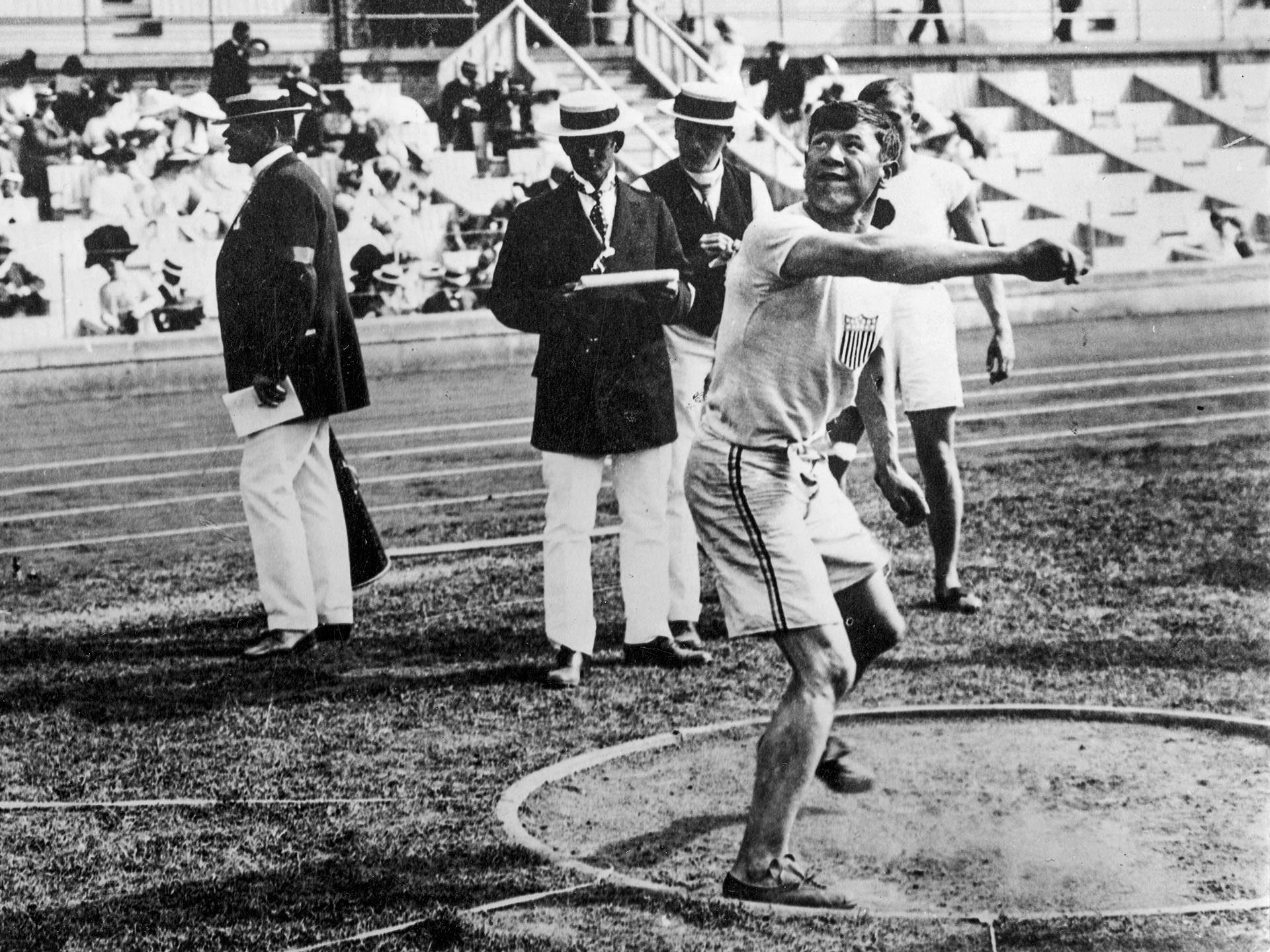
The 1912 games marked the debut of the decathlon and the pentathlon and Thorpe sailed to victory in both events. He first won the
pentathlon that ran from July 7-12 in 1912, winning four of the five competitions — long jump, 200-meter dash, discus throw and 1,500-meter run. He even placed third in javelin throw, a sport he had never played until the Olympics.
Next up was the
decathlon, consisting of 10 competitions that ran from July 13-15 in 1912. Thorpe’s record-breaking achievements in the events were all the more impressive — by this time, his shoes had been stolen in Stockholm. According to
Bright Path Strong, he achieved victory wearing a mismatched pair of shoes that he found in the garbage, a remarkable feat in and of itself.
But Thorpe’s legendary status lives on with another recognition of his athletic prowess.
According to news reports from the time, King Gustav V of Sweden was extremely impressed with the American’s victories.
“You, sir, are the greatest athlete in the world,” Gustav is said told Thorpe during the presentation of the gold medals at the closing ceremony in 1912. “I would consider it an honor to shake your hand.”
“Thanks, King,” Thorpe humbly replied.
Bright Path Strong will continue to tell Thorpe’s story with a
commercial film in his honor. Several tribal nations, along with major inter-tribal organizations, are
partners in the production to ensure it accurately reflects the Olympic legend’s achievements, as well as his crowning as the world’s greatest athlete.
“Son, you’re an Indian, I want you to show other races what an Indian can do,” Thorpe remembers his father telling him.
The words helped inspired Thorpe to success on the national and international stages, striking back at U.S. government policy aimed at eradicating his very Indian identity. In an infamous speech, the founder of Carlisle said boarding schools like the one
Wa-Tho-Huk attended were meant to
“Kill the Indian in him, and save the man.”
”They say that historical trauma is ingrained in our DNA, and I feel like Jim felt that. He was like, ‘You know what? I gotta make something of myself,’” Juanita Toledo, a citizen of Pueblo of Jemez, said in a
interview with Bright Path Strong.
Despite Thorpe’s celebrated status in Indian Country, his
legacy continues to be impacted by injustice. As he was about to be buried by his family on his homelands in present-day Oklahoma in 1953, his then-wife had his remains taken to Pennsylvania.
But the last-minute move was not tied to Thorpe’s history at Carlisle, which had long been shuttered. Instead, his body was taken to a newly-created municipality called the
Borough of Jim Thorpe, located in an entirely different part of Pennsylvania.
The action was motivated partly by financial gain. Not long before his passing, his then-wife
told The Associated Press that Thorpe had “spent money on his own people and has given it away.”
In fact, Thorpe’s generosity and dedication to Indian people had led to him receiving a
new name of Akapamata, which means “Caregiver” in the Sac and Fox language, according to Bright Path Strong.
Citing the
Native American Graves Protection and Repatriation Act of 1990, Thorpe’s sons attempted to have their father’s remains returned to his intended resting place in Oklahoma. They achieved a win when a federal judge determined that the Borough of Jim Thorpe was required to follow the repatriation law.
But the victory, which came after one of Thorpe’s son passed away, was temporary. The
3rd Circuit Court of Appeals later reversed course on the NAGPRA determination. The
U.S. Supreme Court declined to review the matter, effectively keeping Thorpe in Pennsylvania.
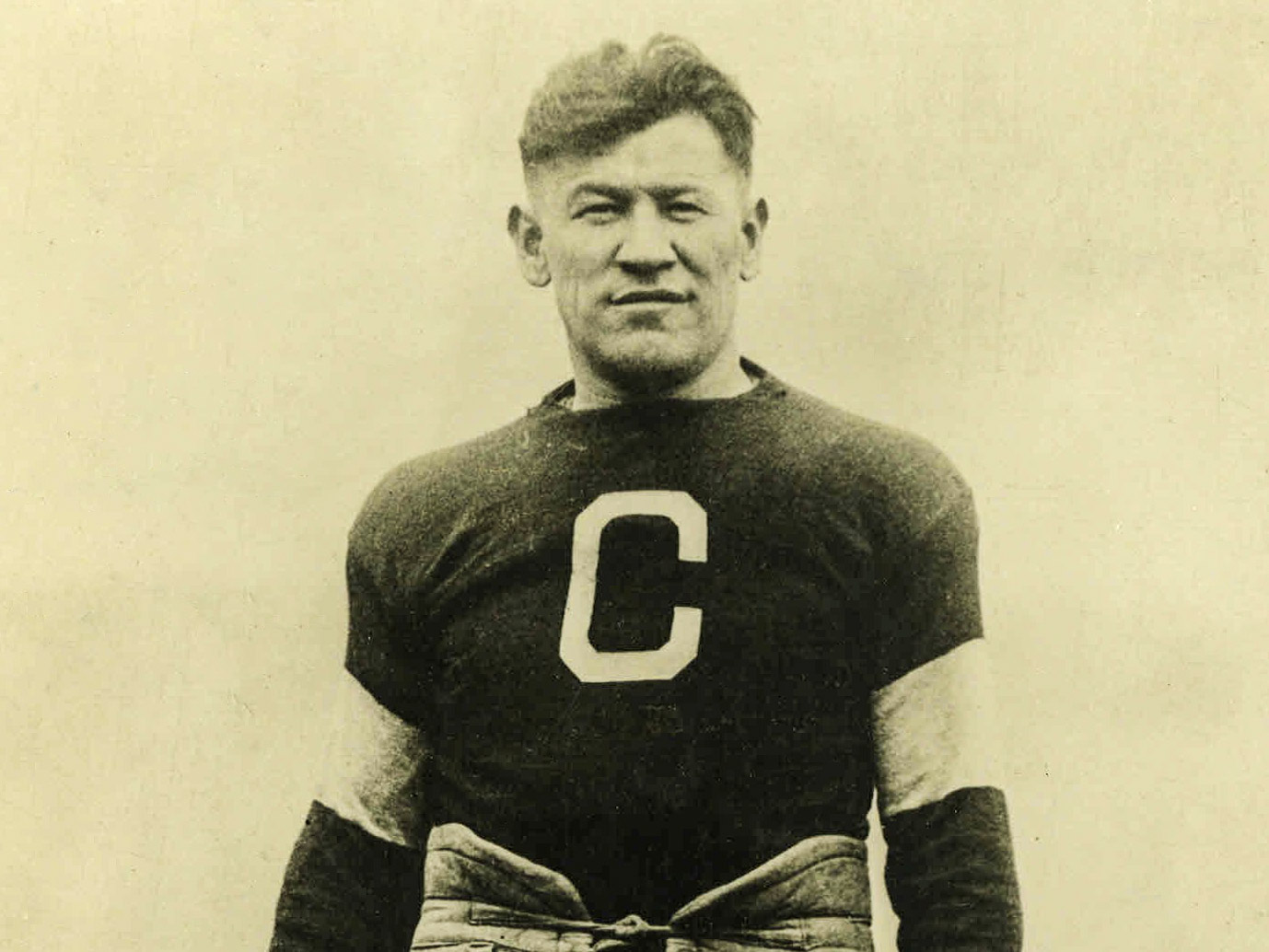
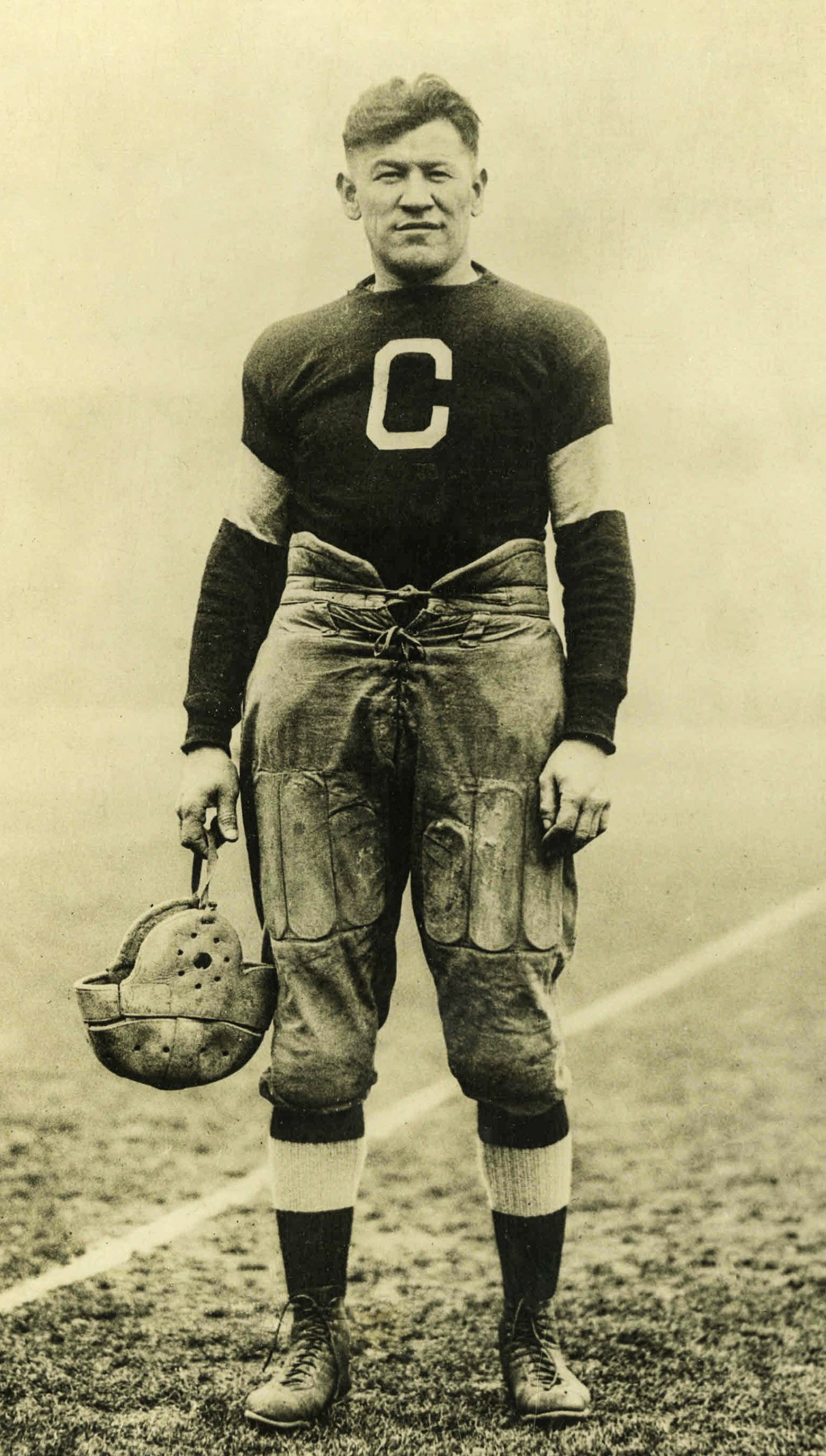
Jim Thorpe is seen in a Canton Bulldogs football team uniform sometime between 1915 and 1920. Photo: public domain
“James Francis Thorpe, or
Wa-tho-huk, ‘Bright Path’ in his Native language, has inspired our people for generations,”
President Fawn Sharp of the
National Congress of Americans, one of the partners in the Olympic medal and film projects, said on Friday. “He was a champion who did, indeed, brighten the path for hundreds of Native people who have lifted themselves up, against all odds, to achieve greatness.”
“The light of true greatness can never be extinguished no matter the forces of darkness that seek to deny it. Jim Thorpe’s light will eternally shine to inspire generations of our youth to believe in themselves and the infinite power of their God-given gifts, talents, and dreams,”
said Sharp, who also serves as vice president of the
Quinault Nation.
Thorpe’s father, Hiram Thorpe, was from the Sac and Fox Nation and was a descendant of famed
Sauk leader Black Hawk. His mother, Charlotte Vieux, was Potawatomi from present-day Kansas and was a descendant of Louis Vieux, a
celebrated Potawatomi leader and entrepreneur.
X (formerly Twitter)