indianz.com Community Development Financial Institutions Fund
Advertise on Indianz.Com
Home Whats New on Indianz.Com? News Forums
  About

November 18, 2008

Connecticut tribes see another drop in revenues

printer friendly
Connecticut's two federally recognized tribes reported yet another drop in slot machine revenues.

Slot revenues were down 7.5 percent at Foxwoods Resort Casino and MGM Grand at Foxwoods, both owned by the Mashantucket Pequot Tribal Nation. The Mohegan Tribe saw a 9 percent drop at the Mohegan Sun.

”We can't really feel good about 9 percent, but considering the numbers of everybody else in the Northeast, we're doing pretty well," said Mohegan Sun executive Mitchell Etess, referring to numbers from other gaming facilities in the region, The New London Day reported.

Both tribes recently debuted casino expansions.

Get the Story:
Slot Numbers Down Locally But Faring Better Than Atlantic City (The New London Day 11/18)
Conn. casino revenues continue downward slide (AP 11/18)
 

Opponents seek closure of Seneca Nation casino

printer friendly
Opponents of the Seneca Nation continued their fight against the tribe's off-reservation casino in downtown Buffalo, New York.

Citizens against Casino Gambling in Erie County wants a federal judge to shut down the Buffalo Creek Casino and hold the National Indian Gaming Commission in contempt of court for failing to act on the facility. Judge William M. Skretny previously ruled the casino site does not quality for gaming.

The Department of Justice and the tribe filed briefs in response to the motion. The tribe has continued to engage in gaming at the site despite the prior court ruling.

Get the Story:
Casino foes urge judge to shut down Buffalo site (The Buffalo News 11/18)
 

Dry Creek Band reports drop in casino revenues

printer friendly

The Dry Creek Band of Pomo Indians of California reported an 8 percent drop in gaming revenues.

The River Rock Casino saw revenues of $32.3 million in the last quarter. That's down from $35 million during the same time last year.

"Everyone knows the current environment is very challenging," said CEO Shawn Smyth, The Santa Rosa Press-Democrat reported.

The tribe planned to expand the facility but scaled back the project due to the economic climate. Then the tribe dropped plans altogether.

Get the Story:
Profits drop at River Rock Casino (The Santa Rosa Press-Democrat 11/18)
 

Soo Tribe seeks extension for sale of Detroit casino

printer friendly

A federal bankruptcy judge held a hearing to discuss the future of the commercial casino that is majority owned by the Sault Ste. Marie Tribe of Chippewa Indians of Michigan.

The tribe plans to sell the Greektown Casino in Detroit but is seeking an extension in order to complete work on the facility. The Michigan Gaming Control Board opposes the extension and wants to affirm that it has the right to force a sale.

Judge Walter Shapero did not rule on the matter but called another hearing next Tuesday to review the issue. He previously set a deadline of December 15 for the tribe to finalize the casino's bankruptcy plans. The hotel at the facility won't be completed until February 12, 2009.

Get the Story:
State tips hand on Greektown (The Detroit News 11/18)
 

Southern Ute Tribe unveils new casino resort

printer friendly
The Southern Ute Tribe of Colorado opens the doors to its new casino resort today.

The Sky Ute Casino Resort and Conference Center features a casino with 540 slot machines, 12 table games and a 180-seat bingo hall. There's also a 146-room hotel with a business center, full-service spa and swimming pool, plus a 24-lane AMF bowling center, an 18-hole mini golf course and 24-site RV park.

To attract more business, the tribe designed conference facilities for the site. The 18,000 square-foot ballroom will hosts meetings and entertainment events.

The facility replaces the old Sky Ute Casino, which closed last week.

Get the Story:
A destination resort (The Farmington Daily Times 11/18)
Southern Ute Indian Tribe’s culture highlights a new casino in southern Colorado (Indian Country Today 11/17)
 

November 17, 2008

World's largest gaming conference in Vegas

printer friendly
The Global Gaming Expo, the world's largest gaming conference, takes place in Las Vegas, Nevada this week.

Indian gaming takes a prominent spot on the agenda. Conference sessions focus on land-into-trust, the 20-year anniversary of the Indian Gaming Regulatory Act, the 2008 election and the economy.

The conference wraps up on Thursday with a keynote on Indian gaming. This year's topic is "Change and Challenges: The Tribal-Community Connection."

J.R. Mathews, vice chairman of the Quapaw Tribe of Oklahoma, will moderate the panel. Speakers Robert Benavides, governor of Isleta Pueblo in New Mexico; John Guevremont, president and CEO of Native American Contracting Services; Kurt Luger, executive director of the Great Plains Indian Gaming Association; Anthony Miranda, chairman of the California Nations Indian Gaming Association; and Tracie Stevens, senior policy analyst for governmental affairs for the Tulalip Tribes of Washington.
 

Meskwaki Tribe starts serving liquor at casino

printer friendly
The Meskwaki Tribe of Iowa began serving liquor at its casino over the weekend.

Sales are limited to the gaming floor and the restaurant at the Meskwaki Bingo Casino Hotel. No liquor is allowed in the poker room or bingo hall, where 18-year-old gamblers are allowed.

Tribal members approved liquor sales in a referendum in April.

Get the Story:
Alcohol sales begin at Meskwaki casino (The Waterloo Cedar Falls Courier 11/15)
 

Navajo Nation to open first casino this week

printer friendly
The Navajo Nation, the largest tribe in the U.S., is finally opening its first casino on Wednesday.

The $30 million Fire Rock Casino features a 65,000 square-foot gaming space with 472 slot machines, a bingo hall, blackjack and five poker tables. More than 200 employees, a large number of them tribal members, were hired for the facility.

The casino is located off a major interstate near Gallup, New Mexico, and not too far from Arizona. The tribe has Class III gaming compacts with both states.

Get the Story:
Navajos bet first casino is a winner (The Arizona Republic 11/17)
Navajo trail to gaming (The Arizona Republic 11/17)
Navajo Nation opens first casino (AP 11/16)
Fire Rock to open Nov. 19 (The Gallup Independent 11/14)
 

Casino Travel: Great tribal resorts in California

printer friendly
"If there’s one true thing about casinos, it’s that they all feel alike.

Walk through that big smoked-glass door and you know where you are in an instant. The casino floor, where the money is won and lost, could be just about anywhere. Day is indistinguishable from night. Cocktail waitresses prowl carpeted aisles between the slot machines, and neon lights flash. Digital beeps drone incessantly, and the rat-tat-tat of coins on metal reminds the losers that somebody else is winning.

But not in San Diego. The gaming-est county in the Golden State, this stretch of sunny real estate has 17 Native American reservations, 10 of them with casinos, most in scenic rural valleys. I’m not much of a gambler, but I’ve tempted Lady Luck in some of these places and gone away with the odd feeling that while I’d lost money, I’d actually done something useful.

Some American Indian casinos are as simple as a gaming hall with a restaurant; others are complete resorts. Many of the tribes spend their profits on their members, providing attractive homes, building schools and community centers, surfacing roads, installing water reclamation plants and paying for health insurance and college scholarships.

But San Diego’s most successful casinos also give away millions of dollars to nearby communities, not just because their legal compacts compel charitable donations (which they do), but because they’re good neighbors. My current fave, Barona Valley Ranch Resort & Casino, gives to local hospitals, sponsors foundations, builds football stadiums for nearby high schools and awards large and small grants to college students."

Get the Story:
BET on a great vacation (The Atlanta Journal-Constitution 11/16)
 

Gaming Traveler: Winning tribal casino destinations

printer friendly
" Thirty-seven states now have some form of casino gambling, and too often, more has not translated to better. Frequently, nondestination casinos - which are most casinos outside of Vegas, New Jersey, Connecticut and the rebuilding Gulf Coast - are drab warehouses stuffed with slot machines.

But occasionally a casino winds up far exceeding the expectations for a "locals" casino. You may not travel specifically to visit these gaming halls, but once you're in the neighborhood, you might discover a pleasant surprise.

Buffalo Thunder
Santa Fe, N.M.

There's no mistaking the American Indian influences in this casino that opened in September just north of the state capital.

Owned by the Pueblo of Pojoaque, a tribe with fewer than 400 members, the casino displays 200 pieces of American Indian art, including pottery, paintings, tapestries, carvings and sculptures. Three large bronzes of Indian dancers were created by the Pueblo governor, George Rivera. Visitors can take a self-guided tour of the art.

By Vegas and Atlantic City standards, it's a cozy casino, with 22 table games, 1,200 slots, and a 10-table poker room. All the slots are touch-screen, multidenominational machines."

Get the Story:
Gaming Traveler: Some winning nondestination casinos (The Philadelphia Inquirer 11/16)
 

November 14, 2008

Rep. Cole eager for Obama's nominees at NIGC

printer friendly
Rep. Tom Cole (R-Oklahoma) supported John McCain in the 2008 election but the only Native American in Congress is eager for president-elect Barack Obama to appoint new members of the National Indian Gaming Commission.

Cole says the current members of the NIGC have imposed "irresponsible and unnecessary regulations" on tribes. NIGC Chairman Phil Hogen (Oglala Sioux) and Vice Chair Norm DesRosiers were nominated by President George W. Bush.

"I look forward to a new commission being appointed and I sincerely hope they do not exhibit the same hostility towards the Indian gaming industry that is the legacy of the current commission," Cole, a member of the Chickasaw Nation of Oklahoma, told The Tulsa World.

Cole has been highly critical of regulations affecting Class II games like bingo and pull tabs. Oklahoma is the largest Class II market in the nation.

The NIGC dropped two of its most controversial Class II regulations but kept two other ones intact. Cole and the Oklahoma Indian Gaming Association say the remaining rules, which became effective this week, will hurt tribes.

Get the Story:
New casino rules deemed costly (The Tulsa World 11/14)
 

Charities worry about Little Traverse gaming funds

printer friendly
Charities and non-profits are worried a lawsuit could reduce or eliminate their share of gaming revenues from the Little Traverse Bay Bands of Odawa Indians of Michigan.

The tribe agreed to share 2 percent of electronic gaming revenues from the Odawa Casino Resort with local communities. The Emmet County Local Revenue Sharing Board decides how to distribute the funds, with a portion going to charities and non-profits.

The lawsuit could upset the distribution because it seeks to re-direct a larger portion to educational institutions. Schools and universities say they are entitled to more money because the tribe has made improvements to the casino site.

The lawsuit was field against the revenue sharing board, not the tribe.

Get the Story:
Revenue sharing lawsuit could impact community agencies (The Petoskey News-Review 11/14)
 

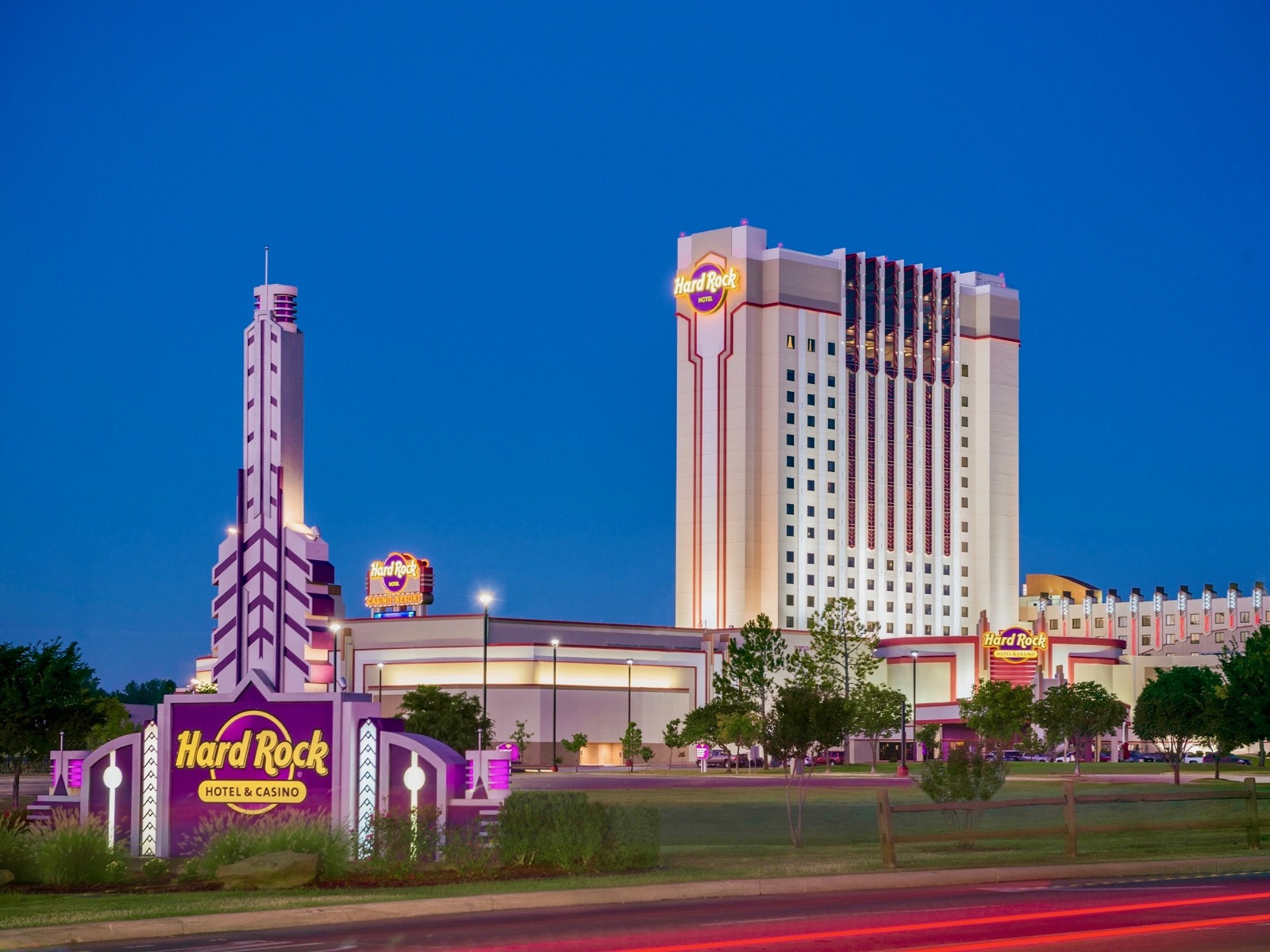
Cherokee Nation brings Hard Rock to Oklahoma

printer friendly
The Cherokee Nation is bringing the Hard Rock name to Oklahoma.

The tribe signed a licensing deal to brand its new $155 million casino as the Hard Rock Casino Tulsa. The agreement needs approval from the National Indian Gaming Commission.

"We are excited about bringing the Hard Rock experience to Tulsa. Hard Rock is a nationally and internationally known brand, and bringing it here allows us to make it uniquely Oklahoma," said David Stewart, CEO of Cherokee Nation Enterprises, in a press release.

Cherokee Chief Chad Smith said the tribe retains ownership of the facility and will continue to manage it. Elements of Cherokee heritage and Oklahoma musical history will be added to the casino.

Get the Story:
Casino to reopen under Hard Rock name (The Tulsa World 11/14)
 

Seminole Tribe debuts Class III games at facility

printer friendly
The Seminole Tribe debuted new Class III games at its casinos in Tampa, Florida.

Customers crowded the Seminole Hard Rock Hotel & Casino to play blackjack, baccarat and poker. "God bless America," one gambler told The St. Petersburg Times. "I love the Indians."

The games were authorized by a compact the tribe signed with Gov. Charlie Crist (R). But the agreement was deemed invalid by the Florida Supreme Court in July.

The tribe has continued to operate slot machines and table games despite the ruling. Attorney General Bill McCollum wants the National Indian Gaming Commission to force the tribe to stop the games.

Get the Story:
Seminole Casino Opens Blackjack, Baccarat Tables (The Tampa Tribune 11/14)
Hard Rock Deals Casino Games (The St. Petersburg Times 11/14)
Billions of tax dollars at stake as some fight expanded gambling (Tampa Bay's 10 News 11/14)
Seminoles start blackjack in Tampa; what next for Broward? (The South Florida Sun-Sentinel 11/14)
 

Mashantucket Tribe faces fight in Pennsylvania

printer friendly

The Mashantucket Pequot Tribal Nation of Connecticut is seeing more opposition to its proposed casino in Pennsylvania.

The tribe and its backers won a state license to operate a slot machine facility in south Philadelphia. But opposition in that community prompted consideration of a new location.

Now, residents of Chinatown are upset that their backyard has been chosen. They are worried about the impact the casino will have on the Asian community and the busy downtown area.

“They keep saying how a casino helps the city, but it’s going to hurt a lot of families in Chinatown,” Maitrivia Liem, 14, told the Associated Press.

But with local officials, including the mayor and the city council, behind the new site, it might be hard for the opponents to beat the casino. The tribe said it will promote responsible gaming.

Get the Story:
Mashantucket Pequot Slots Parlor Plan Opposed (The Hartford Courant 11/14)
Foxwoods: Casino opponents have tough fight ahead (AP 11/14)
Mashantuckets get boost in plan for Philadelphia casino (The New London Day 11/14)
 

Mohegan Tribe leases land for potential casino

printer friendly
The Mohegan Tribe of Connecticut is spending millions to invest in a potential casino in Massachusetts.

The tribe is leasing 152 acres in the town of Palmer in case gaming is legalized in the state. The lease runs for 50 years with an option to extend it for another 49 years and purchase the land.

The tribe operates Mohegan Sun on its reservation and a slot machine facility in Pennsylvania.

Get the Story:
Mohegan Tribe leases site in Palmer for casino (The Boston Herald 11/14)
Mohegan Sun leases land (AP 11/13)
 

November 13, 2008

Saginaw Chippewa casino runs charity promotion

printer friendly
The Saginaw Chippewa Tribe of Michigan is running its first-ever charity promotion at the Soaring Eagle Casino and Resort.

The "Thanks and Giving" promotion offers patrons a chance at winning a jackpot as well as the ability to donate to eight charities. Beneficiaries include the Anishinabe Athletic Youth Association, United Tribes for Christ and Angel Tree, which helps families from the Oglala Sioux Tribe in South Dakota.

The promotion runs for the month of November.

Get the Story:
Casino guests can help local charities through winnings (The Mt. Pleasant Morning Sun 11/13)
 

Letter: Gaming fight on Wind River Reservation

printer friendly
"I would like to comment on news stories that were reported in the Riverton Ranger as it pertains to the Shoshone and Arapaho tribes and the controversy that it has caused within our communities: "Little Wind Casino causes big tribal fuss," and "Shoshones say casino operating illegally on joint land," and "Gaming agency warns tribe on gaming."

Now who opened the door for the Shoshone tribe to enjoy the benefits of class III gaming? I can remember hearing back in the late 1990s that the Shoshone tribe didn't want nothing to do with any kind of casino gaming and that they would not support the Arapaho in taking the state of Wyoming to task.

All of this could have been avoided if the Arapaho Business Council had open dialogue with the Shoshone tribe and shared this information with the Arapaho people through regularly mandated meetings, informing the Arapaho people about their plans of building another casino, a hotel, a clothing store in the half empty casino at Ethete, awarding a 7-year contract to the CEO and other important tribal business.

The tribes should be meeting in "Joint Business Council" rather than assuming a "you do what you want in your community and we do what we want in our community" mentality that has put our gaming enterprise under the watchful eye of the National Indian Gaming Regulatory Agency."

Get the Story:
Eugene J. Ridgely Jr: Tribal infighting complicates results (The Casper Star-Tribune 11/13)
 

Chickasaw Nation offers gas to casino employees

printer friendly
The Chickasaw Nation of Oklahoma is making sure employees at one of its casinos have enough money to drive to work.

Winstar World Casino is located in Thackerville, near the Texas border. The location and the need to recruit employees inspired the tribe to offer a gas incentive.

"WinStar is a rather remote location," general manager Mark Reasoner told KTEN, "and for any of the employees making under $50,000, it starts at $25 per paycheck after taxes, and it goes up, depending on how far away you live. It goes all the way up to 50, 75 from there."

The casino recently filled 350 jobs and is looking to hire 350 more people.

Get the Story:
WinStar Casino Offering Gas Incentives To Employees (KTEN 11/12)
 

Mohegan Tribe eyes casino in Massachusetts

printer friendly
The Mohegan Tribe of Connecticut is still making plans for a casino in Massachusetts even though legislation to authorize commercial gaming failed to pass.

The tribe wants to build a casino in Palmer, in the western part of the state. The tribe agreed to a 50-year lease for a site in the town.

"We're spending several million dollars at this stage is reasonable for the risk and investment that proceeds," said Paul Brody, the vice president of development for Mohegan Sun, CBS3 reported.

Brody acknowledge the downturn in the economy is affecting the tribe but expressed optimism about a recovery.

Get the Story:
Mohegan Sun Commits to Palmer (CBS3 11/12)
 

Morongo Band lays off 95 casino employees

printer friendly
The Morongo Band of Mission Indians of California is laying off 95 casino employees.

The Morongo Resort Casino & Spa cited the downturn in the economy as the reason for the job cuts. They represent about 5 percent of the casino workforce.

"It is unfortunate that we have to reduce the work force, but the economy shows no immediate signs of improvement," Dual Cooper, the resort's general manager, said in a press release, The Riverside Press-Enterprise reported. "We hope to be able to recall employees as conditions improve."

At least two other tribes in southern California have laid off casino employees in recent weeks.

Get the Story:
Morongo Resort Casino and Spa lays off 95 workers (The Riverside Press-Enterprise 11/13)
 

November 12, 2008

Poker still popular at Connecticut casinos

printer friendly
Revenues are down at Connecticut's two tribal casinos but poker games are still drawing in customers in large numbers.

”Just last weekend, our tables were full and people were waiting in line for seats,” Terry Chiaradio, the director of poker operations at the Mashantucket Pequot Tribal Nation's Foxwoods Resort Casino, told The New London Day.

The story was similar at the nearby Mohegan Sun, owned by the Mohegan Tribe. Poker games returned to the casino in August after a five-year hiatus.

Both casinos host high-stakes poker tournaments that draw large numbers of players and observers.

Get the Story:
Poker Rooms Flush With Players At Foxwoods, Mohegan Sun (The New London Day 11/12)
 

Ex-NFL lobbyist works on Internet gaming rules

printer friendly
A former lobbyist for the National Football League is now working at the White House on last-minute regulations to limit Internet gaming.

William Wichterman and his associates at the Covington & Burling firm were paid $2.8 million by the NFL to lobby for limits on Internet gaming. A month after his work ended, he joined the White House as special assistant to the president and deputy director of public liaison.

The White House said Wichterman's efforts were cleared by ethics officers. But Democrats who are questioning the last-minute regulations say there is a conflict of interest.

President Bush signed the Internet gaming ban in October 16 as part of a larger counter-terrorism package that never received full debate in Congress.

Get the Story:
Role of Ex-NFL Lobbyist in Push to Curb Online Gambling Faulted (The Washington Post 11/12)
Bush administration finalizing Internet gambling regulations (AP 11/11)
 

Seneca Nation vows to complete casino

printer friendly
The Seneca Nation will complete its off-reservation casino, re-elected president Barry E. Snyder Sr. said on Tuesday.

The tribe operates a temporary facility in downtown Buffalo. Work was halted on a permanent Buffalo Creek Casino amid a court case and the downturn in the national economy.

The National Indian Gaming Commission is defending the legality of the site. But Snyder said work will resume even if the lawsuit doesn't go the tribe's way.

Two local officials spoke in support of the casino as Snyder was sworn into a fourth term yesterday.

Get the Story:
Re-elected Seneca president sees casino moving ahead (The Buffalo News 11/12)
 

Mashpee Wampanoag Tribe weighs Class II

printer friendly
The Mashpee Wampanoag Tribe of Massachusetts will scale back its casino plans if only allowed to engage in Class II gaming, The Cape Cod Times reports.

The tribe wants to build a casino, hotel, events center and retail complex on 539 acres in the town of Middleboro. But the hotel and possibly the events center will be out of the picture under a Class II scenario, according to a draft environmental impact statement of the land-into-trust application.

Massachusetts does not allow full-scale Class III gaming at this time. Efforts to legalize casinos failed in the last two years.

The tribe expects an answer on its casino early next year.

Get the Story:
Casino plans moving ahead (The Cape Cod Times 11/12)
 

Opinion: Let's make a big deal in Washington

printer friendly
"“Do you want what’s in the box or what’s behind door number three?”

That was the question put to contestants on the classic game show “Let’s Make A Deal.”

Near the end of each show, the host asked those who had already played if they wanted to keep what they had, or risk their cash and merchandise for a chance to choose whatever was behind one of three mystery doors.

While some lucky contestants found they had traded their cash for a new car, more often than not it turned out to be a goat.

Gov. Christine Gregoire played a similar game with the Spokane Tribe over the issue of gambling.

She could have kept the status quo between the tribe and the state.

She could have pressed to bring the Spokane Tribe into compliance with state law, agreeing to give them a similar level of gambling as other tribes.

But Gregoire chose the worst of all options, door number 3 — the largest expansion of gambling in state history."

Get the Story:
State Sen. Jim Honeyford: Gregoire’s deals with tribes just keep happening (The Port Orchard Independent 11/12)=
 

November 11, 2008

Gila River Tribe set for opening of $60M casino

printer friendly
The Gila River Indian Community of Arizona will open a $60 million casino next week despite a downturn in gaming revenues in the state.

The 120,000-square-foot Lone Butte Casino is located near Chandler. It features 850 slot machines, 24 blackjack and Pai Gow poker tables, a 750-seat bingo hall, six restaurants and 2,500 parking spaces.

Earlier this month, tribes reported the largest year-to-year drop in gaming revenues.

Get the Story:
Lone Butte casino will open Nov. 20 (The Arizona Republic 11/11)
 

Cherokee Nation debuts expansion of casino

printer friendly

The Cherokee Nation debuted a big expansion of its casino in West Siloam Springs, Oklahoma, near the Arkansas border.

The gaming floor now stretches more than 200,000 square-feet. That's a lot bigger than the small bingo hall that opened on the site in 1993.

"I feel like I'm not even in the same world anymore," Mark Smith told The Benton County Record after seeing the new place.

The tribe is spending $125 million on the facility, which is creating 500 new jobs.

Get the Story:
Cherokee Casino welcomes patrons to grand new site (The Arkansas Democrat Gazette 11/11)
Wagering on success : Cherokee Casino opens in West Siloam Springs, Okla. (The Benton County Record 11/11)
 

Colorado tribes to benefit from gaming referendum

printer friendly
Colorado's two tribes will be able to expand operations at their casinos thanks to voter approval of a gaming referendum last Tuesday.

Amendment 50 allows non-Indian casinos to raise betting limits from $5 to $100, add craps and roulette tables and stay open around the clock. The Ute Mountain Ute Tribe and the Southern Ute Tribe can do the same under provisions of their Class III gaming compact.

The Colorado Commission of Indian Affairs will work with the tribes to implement the changes.

Get the Story:
Tribal Casinos May Increase Stakes Too (AP 11/10)
Colo. casinos hope (AP 11/10)
 

St. Croix Band hopeful with Obama administration

printer friendly
The St. Croix Band of Lake Superior Chippewa Indians of Wisconsin says its off-reservation casino will be reviewed more favorably by president-elect Barack Obama's administration.

The St. Croix Band and the Bad River Band of Lake Superior Chippewa Indians plan a casino in Beloit. Despite strong local support, the tribes fear Interior Secretary Dirk Kempthorne is about to kill the project because he opposes off-reservation gaming.

"You'll hear a cheer from Indian country when Dirk Kempthorne is removed," casino spokesperson Joe Hunt told The Beloit Daily News.

The tribe filed a lawsuit to challenge new gaming policies at the Bureau of Indian Affairs. A federal judge rejected the claims but the tribe is appealing.

Get the Story:
New dealer for casino plan (The Beloit Daily News 11/10)
 

November 10, 2008

Jamestown S'Klallam Tribe watches economy

printer friendly
Gaming revenues are up but the Jamestown S'Klallam Tribe of Washington is still feeling the effects of the economy.

The tribe 7 Cedars Casino saw a 15 percent increase in visitors from October 2007. The month was the fourth-best since its opening.

But plans for a seven-story hotel and conference center at the casino have been slightly delayed due to economic conditions. The tribe is confident it will secure financing for the $100 million to $120 million project by summer 2009.

Get the Story:
Sour economy delays tribe's hotel project, but execs still optimistic about 7-story complex (The Peninsula Daily News 11/9)
 

Pauma Band to cut casino jobs amid downturn

printer friendly
The Pauma Yuima Band of Mission Indians of California will be eliminating employees at Casino Pauma.

The tribe cited the economy in making the cuts. It's not known how many employees will be let go.

The tribe has been planning an expansion of the casino but wouldn't say whether the economy would affect the project. "We remain hopeful about the future and our role in helping to jump-start our regional economy," acting general manager Tracy Le Duff said in a statement to The North County Times.

Get the Story:
Casino Pauma to cut employees (The North County Times 11/9)
 

Menominee Nation sues to halt casino review

printer friendly
The Menominee Nation of Wisconsin filed a lawsuit in federal court on Friday to prevent the Bush administration from rejecting its proposed off-reservation casino.

In October, the tribe asked the Bureau of Indian Affairs to halt work on the project. Officials feared Interior Secretary Dirk Kempthorne would kill it in his final weeks in office.

The request to hold off, however, was denied last week, so the tribe decided to go to court. “Interior Secretary Dirk Kempthorne tried in January to rewrite the rules to fit his own personal views against off-Reservation gaming,” Chairwoman Lisa Waukau said in a statement. "After we showed how our project fit even his new January rules, we learned from Secretary Kempthorne's people that it didn't matter, he was going to reject us anyway. That’s illegal, unfair and unacceptable.”

Since Kempthorne joined the Bush administration, the Interior Department has adopted policies -- without tribal consultation -- to make it harder for tribes to open casinos away from existing reservations. In January, the BIA adopted a "guidance memorandum" that raises the bar for off-reservation land-into-trust applications.

Prior to that, the BIA changed the way in which off-reservation applications are reviewed in a way that downplays local support of such projects. Before Kempthorne came on board, the BIA decided to reject gaming compacts that refer to land that is not yet held in trust.

Get the Story:
Menominee tribe sues to keep casino hopes alive (The Milwaukee Journal-Sentinel 11/8)
Menominee sues over Kenosha casino (The Daily Kenoshan 11/7)
Tribe sues to suspend review of Kenosha casino (The Business Journal of Milwaukee 11/7)
 

Seminole Tribe settles most casino lawsuits

printer friendly

The Seminole Tribe of Florida settles most of the lawsuits filed by patrons of its successful Hard Rock casinos, according to one attorney.

Jeffrey "Jack" Gordon has filed more than a dozen claims against the tribe and has settled all but two. He's now trying to use the tribe's disputed Class III gaming compact to argue that it provided a limited waiver of sovereign immunity.

"Once you waive it, it's waived," Gordon told The St. Petersburg Times. "We'll see how it plays out."

A waiver could help the family of Annie Talley. The 55-year-old woman died after suffering a heart attack at one of the tribe's casinos in May 2007 and her daughters say employees didn't do enough to save her.

The tribe does all the work to determine whether to settle a claim. But it won't release police reports, 911 tapes or other information to outsiders

Get the Story:
Seminole Tribe shields against releasing records in Hardrock death (The St. Petersburg Times 11/10)
Seminoles may call state's hand on blackjack in Tampa (The St. Petersburg Times 11/8)
 

BIA releases Mashpee Wampanoag report

printer friendly
The Bureau of Indian Affairs has released a draft environmental impact statement on the casino sought by the Mashpee Wampanoag Tribe of Massachusetts.

The 1,306-page report looks into the effects of the casino on water, wildlife, wetlands and traffic in the town of Middleboro. The tribe plans a 600,000 square-foot casino, a hotel, a parking garage, a station and golf course on 500 acres there.

The report is part of the land-into-trust process that the tribe started in August 2007. The tribe filed the applications after gaining federal recognition in May 2007.

A pending U.S. Supreme Court case that affects newly recognized tribes could play a role in the process. Also, full-scale Class III gaming is not legal in Massachusetts.

Get the Story:
Report raises casino issues (The Brockton Enterprise 11/10)
Ban reignites slots debate (The Cape Cod Times 11/10)
 

Powered by
Movable Type 3.33
Google
Tools

News Topics


Home | Abramoff | Arts & Entertainment | Business | Canada | Cobell | Education | Environment | Forum | Health | Humor | Indian Gaming | Jobs | Law | National | News | Opinion | Politics | Recognition | Red Lake | Sports | Trust

Suggest a Site

Indianz.Com Terms of Service | Indianz.Com Privacy Policy
About Indianz.Com | Contribute to Indianz.Com | Advertise on Indianz.Com | Write to Indianz.Com

Indianz.Com is a product of Noble Savage Media, LLC and Ho-Chunk, Inc.